KYIV, Ukraine (AP) — Elon Musk said on Saturday that his company SpaceX had throttled the Starlink satellite internet service in Ukraine, disrupting operations that the country relies on to defend itself against Russia.
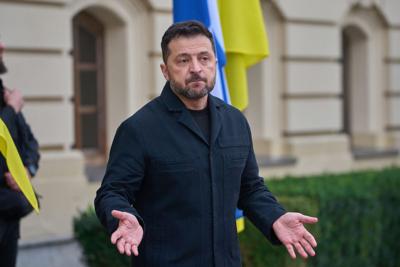
Musk's admission on social media came after Ukrainian President Volodymyr Zelenskyy said that Ukraine’s access to Starlink and Starshield satellite links has been restored to the speeds it had before restrictions that disrupted front-line operations for more than a week.
Questions have persisted since last week about who ordered the interruptions to the Musk-made satellite internet system that Kyiv has relied on for years to counter Moscow’s attacks.
“The speeds are now where they need to be,” Zelenskyy wrote on X, adding that restoration began overnight and were sufficient by Saturday morning, improving front-line logistics and defense against Russian jet-powered Shahed drones.
Musk admits he was behind Starlink’s speed restriction
After Ukraine said the services had been restored, Elon Musk spoke out on the speed restrictions that began last week. In a post Saturday on X, Musk acknowledged that his company SpaceX throttled the Starlink satellite internet service.
“Using Starlink, a civilian commercial service, for offensive drone strikes to kill people has never been allowed, nor should it be,” Musk wrote. “Ukraine military violated Starlink terms of service and used it for offensive drone strikes to kill people. That loophole was closed last week.”
But he maintained that the U.S. government controlled whatever changes happened with Starshield, the military-grade version of Starlink that is the backbone of Ukraine’s drone operations and communication. He also defended the role of SpaceX in bolstering Ukraine’s defenses since Russia’s full-scale invasion of Ukraine in February 2022.
Restrictions imposed last week on Starshield alarmed the country’s military and government officials, with commanders reporting lost drones and disrupted missions.
The restoration follows a new U.S. diplomatic push to end the war. Russia agreed Wednesday to resume three-way negotiations with Washington and Kyiv next month. On Friday, Kyiv and Moscow also agreed to a localized ceasefire brokered by first lady Melania Trump around Oleshky, a war-ravaged, Russian-occupied town in Ukraine’s southern Kherson region.
Restriction led to tensions between Ukraine and the US
The episode added to tensions between Kyiv and Washington, a relationship already strained by President Donald Trump’s reported deal with Moscow on Russian diesel imports, which Ukraine viewed as a betrayal.
Ukraine's Defense Minister Yevhenii Khmara credited “direct dialogue” and Zelenskyy’s diplomacy with Washington, adding that the outcome mattered most “for our front, for the military, the work of drones, logistics and communications.”
Trump has maintained that he didn’t make the call, while also saying Musk should not be blamed. Vice President JD Vance has hinted at White House coordination with Musk, while Secretary of State Marco Rubio and Defense Secretary Pete Hegseth have denied any administration involvement.
Russia and Ukraine have continued to target each other
Meanwhile, a man was killed and two others wounded in a missile attack on the city of Lozova in Ukraine's Kharkiv region, local officials said Saturday.
Moscow-installed authorities in cities across Russia-occupied Crimea reported power blackouts Saturday following overnight Ukrainian attacks.
Ukraine’s General Staff said Saturday that its forces hit a chemical plant in the Russian city of Tolyatti, which produces materials used in rocket fuel. Tolyatti Mayor Ilya Sukhikh said the overnight attack damaged industrial facilities in the city.
Ukrainian forces also hit an electronics plant in the city of Oryol, Ukraine’s General Staff confirmed Saturday. Local officials in Oryol said Saturday that three people were killed in Friday’s attack. The General Staff said the plant makes components for the cruise and ballistic missiles Russia fires at Ukrainian cities.
Ukrainian drones also reached Russia’s Omsk region in western Siberia, more than 2,000 kilometers (1,242 miles) from the border with Ukraine. Omsk regional Gov. Vitaly Khotsenko said drones “reached a northern industrial hub.”
Online retailer Ozon said Saturday that its logistics center in Omsk has been attacked by a drone, but there were no casualties. Ozon is a competitor to Wildberries, whose facilities Ukraine has also targeted.
Morton reported from London.
Follow the AP’s coverage of the war in Ukraine at https://apnews.com/hub/russia-ukraine