
President Barack Obama says he hopes the release of a Senate report on harsh CIA interrogations helps leave the harsh torture techniques "where they belong -- in the past."
Obama says in a written statement that the report reinforces his view that harsh interrogations techniques "were not only inconsistent with our values as nation, they did not serve our broader counterterrorism efforts or our national security interests."
The president's statement comes moments after a Senate committee released a long-anticipated report on CIA interrogations during the administration of his predecessor, President George W. Bush.
The head of the Senate Intelligence Committee says the panel's report on brutal CIA interrogation practices used after the 9/11 terror attacks is a troubling record of a stain on America's history.
Sen. Dianne Feinstein says the CIA interrogation techniques used on at least 119 people in some cases amounted to torture. The report also says the CIA deceived the nation with its insistence that the harsh interrogation tactics had saved lives. It says those claims are unsubstantiated by the CIA's own records.
The California Democrat says that releasing the Senate committee's report on those interrogation tactics is an important step in restoring American values.
Addressing concerns that the release of the report could add to turmoil in the world, Feinstein said the report is too important to leave on the shelf.
The 500-page report represents the executive summary and conclusions from a still-classified 6,700-page full investigation.
Meanwhile, the U.S. embassies in Afghanistan and Thailand are warning of the potential for anti-American protests and violence in the aftermath of the release a Senate report outlining harsh interrogation techniques used by the CIA on terrorist suspects.
In identical notices to Americans in the two countries, the embassies said the release of the report "could prompt anti-U.S. protests and violence against U.S. interests, including private U.S. citizens."
Afghanistan and Thailand were host to two of the secret facilities where prisoners were interrogated with methods the report calls torture.
The notices urged Americans to be alert to their surrounding and take appropriate safety precautions, including avoiding demonstrations or confrontational situations.
It was not immediately clear if other embassies would issue similar warnings.
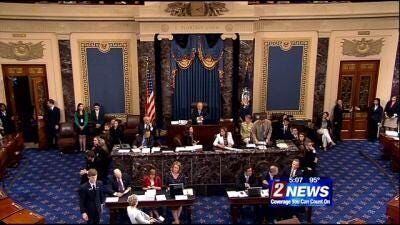
Nevada Senator Harry Reid spoke on the Senate floor today to discuss the declassified report by the Senate Intelligence Committee on the interrogation practices of the Central Intelligence Agency (CIA) during the Bush Administration. Below are his remarks as prepared for delivery:
Today, for the first time, the American people will learn the full truth about the torture that took place under the CIA during the Bush Administration.
I have served alongside Senator Dianne Feinstein for 22 years. She has proven herself to be one of the most thoughtful and hard-working members in the history of this body. I am proud of her work as Chairman of the Senate Intelligence Committee. We are here today because of her efforts. She has persevered and overcome obstacles to make this study available to the American people.
I appreciate the work of the Democratic Senators, members of the committee and their staffs who have spent the past seven years working on this vitally important report. It wasn't easy, but they did it. Committee members and their staff combed through more than 6 million pages of CIA documents in order to formulate the report. The full committee study is 6,700 pages. The unclassified executive summary of the report which is being released today is over 500 pages.
I remind everyone that the Select Committee on Intelligence, along with the House Committee, is the only group of people who provide oversight over our intelligence community and have the ability to actually investigate what happened. No one else – not the press, not other Senators, not the public or outside organizations – actually have the ability to investigate the CIA. And the implications of this report are profound – not only is torture wrong, but it doesn't work.
Without this report, the American public would not know what actually took place under the CIA's torture program. This critical report highlights the importance of Senate oversight and the role that Congress must play in overseeing the executive branch. The only way our country can put this episode in the past is to come to terms with what happened and commit to ensuring it will never happen again.
This is how we, as Americans, make our nation stronger. When we realize there is a problem we seek the evidence, we study it, we learn from it, and then we set about to enact change. Americans must learn from our mistakes – as we did with the Pentagon papers, the Iran-Contra affair, and more recently, Abu Ghraib.
I believe that the United States can protect our national security without resorting to methods, like torture, that are contrary to our fundamental values. I call upon the Administration, the Intelligence Community, and my colleagues in Congress to join me in that commitment.