

New companies are moving to northern Nevada. They often hire local workers at high wages. The population is still growing though, and experts say housing supply is not keeping up with it.
"It's a simple economic equation," Mike Kazmierski, CEO of the Economic Development Authority of Western Nevada said. "We're just not building enough and the demand continues to go up, so the prices go up."

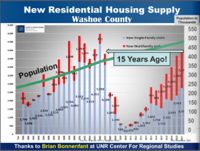
The graph shows how new home construction has not kept up with population growth since the Great Recession.
Kazmierski says Reno and Sparks need 6,000 new housing units to be built each year. That was less than 4,900 in 2021.
"We were building 6,000 housing units for 10 years before the recession with no problem, so when people say it can't be done, well we did it with a lot smaller economy and a lot smaller community," Kazmierski said.
The average sale price of a home in Reno and Sparks is $545,000. That is pricing a lot of people out of the market. Officials say buyers can still find a home but that it could take some time.
"We have a lot of buyers that are coming over with cash from other states and we need to just be patient because there's multiple offers and low inventory market," Sarah Scattini, President of the Reno/Sparks Association of Realtors said.
Scattini says there are also a lot of residents who are selling their homes for the higher prices and finding more affordable housing in other areas.
"They're selling here and taking the money, they're equity and taking that money and relocating to other states," Scattini said.
The higher home prices are causing more people to rent instead of buy. That is also driving up the rent for apartments, which have a two percent vacancy rate.
"Many of the people that live in apartments, right now, will be homeless or move somewhere else because our prices keep going up," Kazmierski said. "If we don't adequately address housing, and there's a lot of things we can do that we're not doing, right now, we're going to take the lower wage employees and put them on the streets, put them in campers. They're going to have to move somewhere else to live."
Kazmierski says there is no easy solution to the problem. There are several developers with plans to build more housing but they still need approval. He says for every month of building delays, the price rises $4,000.
"These Daybreaks and other projects we've delayed for four years, 10,000 housing units our city council has delayed," Kazmierski said. "Because of that delay, the housing costs have gone up, more than doubled."
Kazmierski says wages are not the problem. Demand is just exceeding supply. He says most of the companies that have come to the region are paying an average of at least $30 per hour.
"You cannot find an employee in this town unless you're paying them 20 bucks an hour.," Kazmierski said. "Seven years ago, that was 12 bucks an hour."
He says the housing prices are eventually going to have a negative effect on the local economy. Many young people will not be able to buy a house and rent will be too high to live in the area. He says that is already keeping some businesses from making their homes in northern Nevada.
"We have many projects now, a half-dozen, in the last several months that said 'Your housing prices are too high. We're not coming,'" Kazmierski said.
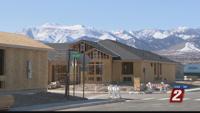
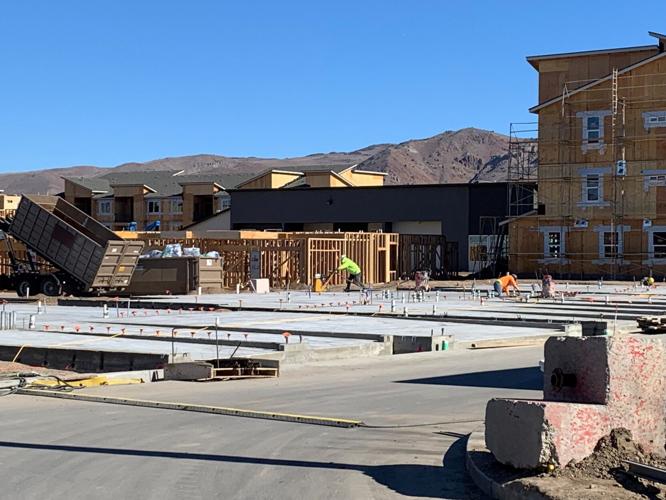
Construction companies are building large apartment buildings, along with single-family units. Kazmierski says it is not enough though. Building dropped off after the Great Recession and despite the population growth, construction volume is still not up to the same level as it was 15 years ago.