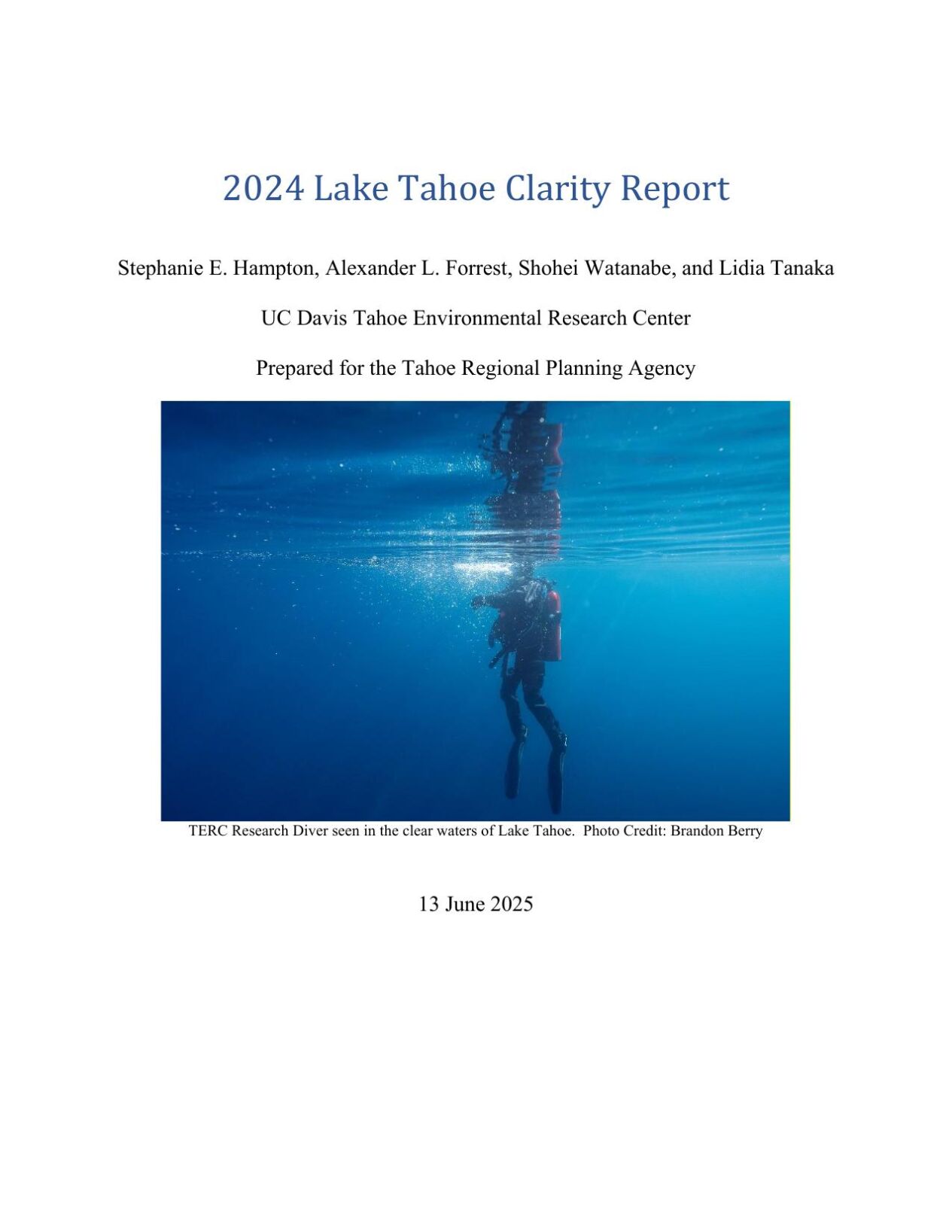


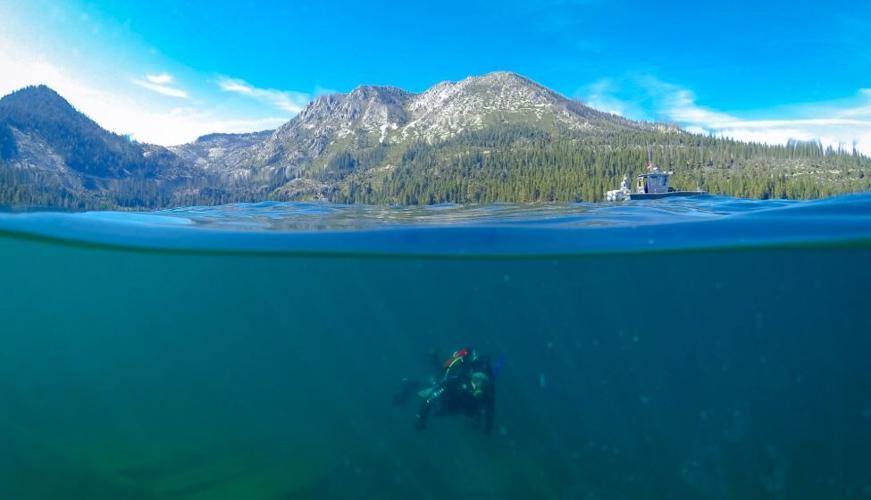
Lake Tahoe's clarity is stabilizing overall, but not improving, according to the newest annual clarity report released the University of California, Davis – Tahoe Environmental Research Center.
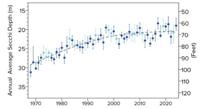
UC Davis researchers say visibility measured 62.3 feet in 2024, as compared with 68.2 feet in 2023 and 71.9 feet in 2022.
The number is a measure of the depth at which a white disk remains visible underwater.
UC Davis says, "winter clarity has been stable or improving in recent years, though was relatively poor (68.9 feet) in 2024 following an exceptional 91.9-foot average the winter prior. The past 10 summers have marked some of the worst averages on record, with 2024 summer averages measuring just 53.4 feet below the surface."
UC Davis has been measuring clarity at Lake Tahoe since 1968.
"Detailed investigations conducted about 20 years ago pointed to sediment as the primary particles driving Tahoe’s clarity. A variety of management actions to reduce sediment runoff into the lake followed. Today, Lake Tahoe faces new challenges. It is warmer, more affected by wildfire and smoke than it was in recent decades, and its ecology is being impacted by aquatic invasive species."

Keep Tahoe Blue CEO Dr. Darcie Goodman Collins released this statement regarding the Lake Tahoe Clarity Report:
“For another year, Lake Tahoe’s multi-year averages for water clarity are stable, despite the continuing trend of declining summer clarity readings.
"Over the past two decades, investments in programs to limit the amount of fine sediment particles — from roads, urban areas, and degraded streams and wetlands — entering the Lake as stormwater have been successful. The report shows those dollars and efforts have been good for water clarity. Yet, we now know that stopping fine sediment pollution is not enough to bring back the water clarity lost last century.
"So, we need to dig deeper and learn more about the processes and interactions going on below and above the surface. What role do algae and phytoplankton play in clarity? What role does wildfire smoke and ash play? What about the effects of microplastic pollution and aquatic invasive species?
"These are questions that don’t have easy or fast answers. But anyone who has ever experienced Tahoe knows the effort is worth it, so we can give our kids and their kids the gift of a beautiful, blue, healthy Lake. The 68-year-and-counting movement to Keep Tahoe Blue is about future generations. So, let’s reinvest in scientific research, test innovative solutions, and then double-down on what works.
"In the meantime, there are things everyone should do to reduce their own impact on the Lake, like using alternative transportation, stopping the spread of invasive species by cleaning, draining, and drying your gear before putting it in the Lake, refusing to buy single-use plastics that often end up as trash in our environment, and volunteering at restoration events that repair Tahoe’s marshes, meadows, and creeks — the Lake’s natural pollution filters.
"Clarity matters because the water is our biggest clue about how the Lake is doing. If we lose the clear water of Tahoe, we lose everything we love about it. Let’s all do our part to Keep Tahoe Blue.”