



When does a political attack ad go too far?
The more public you are as an official, the less protection you have against another party exposing your embarrassing or criminal personal history or even making false disparaging claims about you.
"You give up a great deal of any claim for libel or slander as you become more public," said Fred Lokken, Truckee Meadows Community College Political Science Professor.
While candidates can sue political ads for false messaging, their success rate is very low because the burden of proof is much higher for them than for private citizens.
The landmark 1964 Supreme Court case "New York Times Co. v. Sullivan" established that public officials cannot recover damages for a defamatory statement, even if it is false.
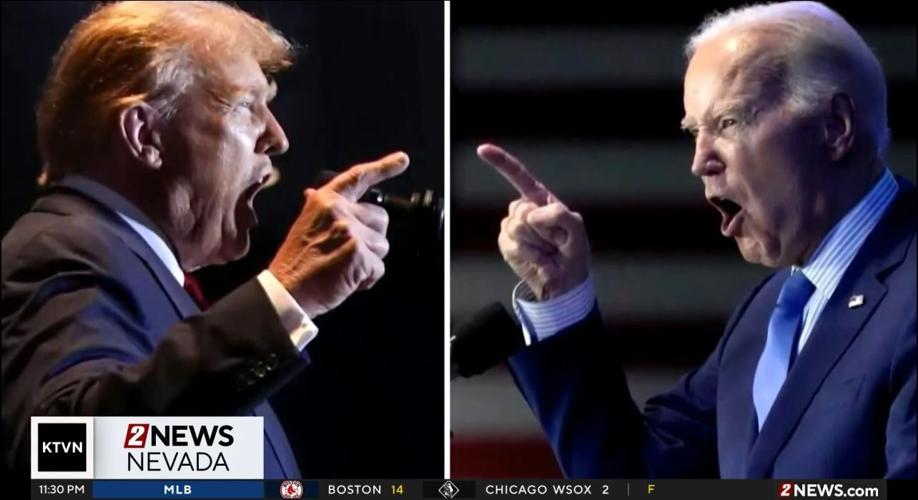
"Within the context of an election and politicians, the courts have been fairly consistent both at the state and national level. We have to protect the highest possible protection of free speech. We've seen it exercised in national campaigns in ways unlike anything we have ever witnessed," explained Lokken.
Public relations expert and political columnist Michael Schaus explains that heavy-handed and low-blow attacks on opponents' candidates or even their families are not unprecedented in our nation's history.
"Negative ads are one of those things that you're never going to get rid of, and we never have gotten rid of it. In fact, as bad as things are today, if you look back at the 1800s, they were significantly worse and nastier. Families, kids, and wives: They were all fair game for somebody if you were going after a political opponent. And it was pretty nasty stuff for a long time there. It's still bad, but putting it in perspective and realizing this is nothing unprecedented. This is just part of human history and human nature, not even American history," explained Schaus Creative LLC Founder and political columnist Michael Schaus.
OPINION: Negative campaigning exists for one reason: it works by Michael Schaus
Unique to Nevada, political groups' financial reporting is due in July, after the statewide primary this Tuesday. And that lack of transparency could be driving the vitriolic message up.
"They don't have to report where they're getting their money or exactly how they're spending their money. None of their financial information is due until after the primary. The result is that a lot of these independent groups are not directly funded by a candidate; they are a little bit more liberated to go after folks because you don't have the ammunition there if you're their opponent to say, hey look, they're being funded by so and so, or this union is funding them, or this organization, or this group. So, it just makes it a little more of an opaque process, which tends to benefit them. I don't think it's the driving cause behind all of the negative ads, but it is certainly a reason why we see negative ads balloon right before the primary," explained Schaus.
Those considering a political career should prepare to take lumps if they have a checkered past or missteps in a past policy position. For instance, Nevada's Attorney General Aaron Ford's past encounters with the law when he was much younger came to light during the 2022 Nevada AG race.
"In the process of a democracy, a marketplace of ideas, there should be very few boundaries. We should see things that offend us in that conversation because there is nothing about being nice to each other in the First Amendment, but it is where the collective of voices gather and where our politics resides. And our collective voices don't necessarily live at the edges; they live in the middle. So, the voices in the middle come together to make the majority express their disdain and dissatisfaction. The best way to do that is by using the ballot box," said Lokken.
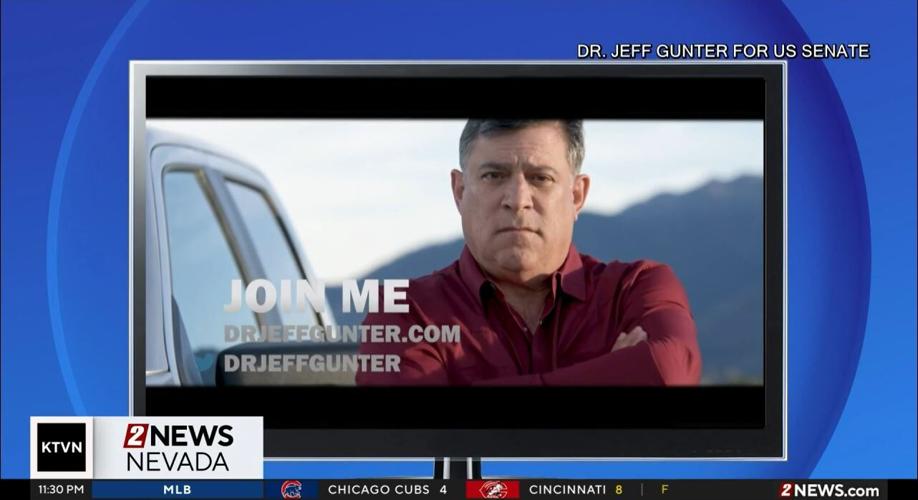
(Sam Brown and Jeff Gunter skip debates and trade barbs in attack ads)