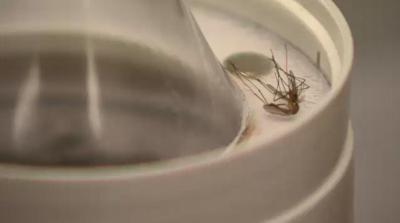
If you are enjoying the nice weather, there's a good chance the mosquitoes are, too. The wet winter left behind a lot of standing water, creating more breeding ground for the insects.
"People don't like mosquitoes, whether they transmit disease or if they're biting them," Jim Shaffer, Vector-Borne Disease Program Manager said. "Our job is to go ahead and keep those numbers low."
Wetlands in areas like Kiley Ranch, Donner Springs, South Meadows, Damonte Ranch and Washoe Lake are usual hot beds for mosquitoes, and the extra standing water could offer even more places to lay their eggs.
"Mosquitoes can lay eggs in like a half-inch of water and normally they find the water before we do," Shaffer said.
That means mosquitoes can lay eggs in something as small as a bottle cap. That is why people are encouraged to keep anything that can collect water out of their yards.
"If the water is moving, you're not going to find mosquitoes in it. It's when the water is stagnant," Shaffer said.
Experts are already trapping mosquitoes to test them. Twelve species of mosquitoes in Nevada can carry diseases like West Nile Virus, St. Louis Encephalitis, and Western Equine Encephalitis.
"We want to go ahead and find that virus and it's not easy. It's like finding a needle in a haystack," Shaffer said.
Zika is not found in any of northern Nevada's mosquitoes but traps are continuously checked to make sure that is still the case. Areas where there are high numbers of mosquitoes are targeted by Washoe County, where they try to kill adult mosquitoes and the larvae. Still, they can't kill them all, so residents are encouraged to use DEET, while outdoors.
"We are expecting a lot of mosquitoes, this year. If you're going to be out in the evenings or early mornings, put the repellent on," Shaffer said.
Residents are also encouraged to repair any screen doors or windows in their homes, to keep mosquitoes out. Since horses are susceptible to West Nile Virus, experts say they should be vaccinated.