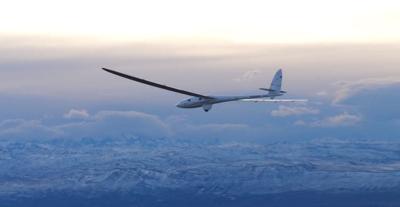

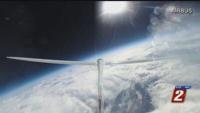

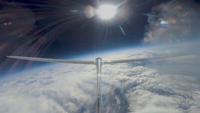


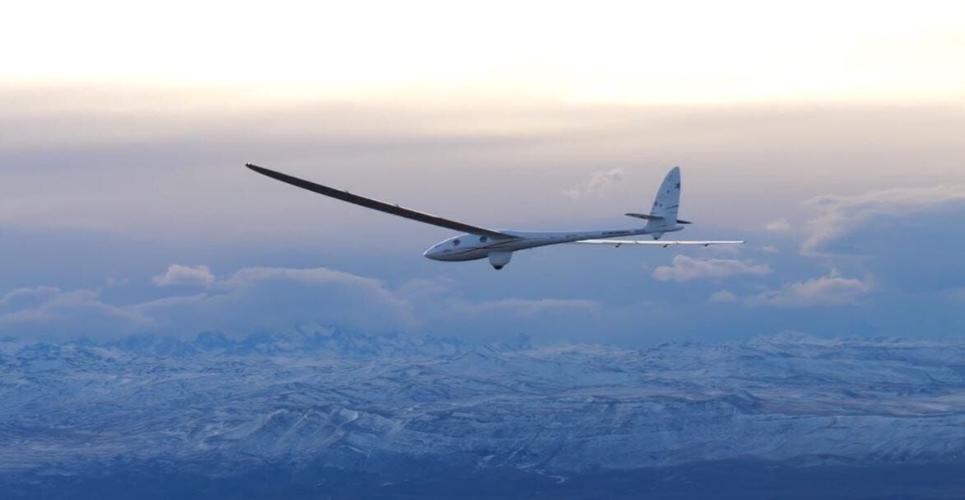
The Airbus Perlan II completed its first test flight this week after waiting for the weather to clear up.
A few upgrades were made after last season fitting the aircraft with new technologies.
The glider is the world's first engine-less aircraft that is designed to reach the edge of space.
The glider is based at the Minden-Tahoe Municipal Airport.
Members of the flight team say they are pleased with Perlan's performance, calling it a success.
Chief pilot Jim Payne says the Airbus Perlan II is essentially a space capsule with wings. And like all gliders, it flies with no engine. “We control it exactly like an airplane, we have a stick and rudder, which allows us to control the bank, the pitch and the yaw of the airplane,” explains Payne.
But the un-powered aircraft is at the mercy of weather. The same airwaves that cause turbulence when we fly in commercial airplanes is used with purpose when the Perlan glider takes to the sky, "And we just find air that is rising faster than the glider is sinking through it."
"Picking up energy from the atmosphere in certain places on earth where the conditions create almost these elevators in the sky that reach basically to the edge of space,” James Darcy, Head Of External Communications at Airbus explains further.
Patagonia, at the southern tip of Argentina is one of those places. That's where the Perlan team has already broken altitude records and plans to surpass during the upcoming June trip.
"The airplane is designed to go to 90,000 feet so this year we go back to Argentina we will continue our build up and the goal will be flight level nine-zero-zero...90,000 feet,” pilot Payne tells us.
And all the while gathering vital atmospheric data.
"Being an un-powered aircraft it doesn't contaminate the air around it. It doesn't heat it, it doesn't put exhaust into it, so it's a very pure research platform." explains Darcy.
Research that has endless applications from space travel to commercial transportation. The Perlan Project team hopes it also inspires and informs the next generation of aerospace engineers.
You can follow the adventures of Airbus Perlan Mission II starting this fall via its Virtual Cockpit at this link here: http://bit.ly/2H9l82h
Sign up for alerts at PerlanProject.org/contact or in the U.S. text “Perlan” to 57682.