Wildlife officials say they are receiving a higher number of calls regarding bear sightings. They say that is because bears are running out of natural food in the wilderness, so they are moving into neighborhoods in search of food. They are going through a process called hyperphagia, when they are putting on weight before hibernation. Bears normally eat about 5,000 calories per day, but now they are eating about 20,000 calories.
"Bears have a really strong sense of smell so if they smell it, that's going to attract them to your property," Ashley Sanchez, Public Information Officer for the Nevada Department of Wildlife said.
Residents are encouraged to keep clear fruit from their trees and pick up any fruit that has fallen on the ground. It is also a good idea to secure your trash or even buy a bear-proof trash container. Bird seed is also attractive to bears.
"Bears love bird feeders so if you could, bring them in overnight," Sanchez said. "Another great option is to scatter the seeds all over the ground and that's easy for the birds to get but not so easy for the bears."
It is estimated that 600-700 bears live in Nevada and about 10,000 live in the Sierra. Sgt. Dave Hunt of the Placer County Sheriff Office says the bears that live in the Lake Tahoe Basin are most likely garbage bears.
"You'll see the bears heading into the garbage cans, breaking into sometimes occupied residences, mostly unoccupied residences in search of food," Hunt said.
Bears have a keen sense of smell, so they will also break into cars if there is something inside that they want.
"Even if it's not edible and it's scented, it attracts them to the car and they're strong enough," Sanchez said. "They'll break into it to get to it."
People should also lock their doors to prevent bears from breaking in.
"The bears have learned how to open car doors and once they get in the car and the door shuts behind them, they don't know how to get out, so they will just rip the entire inside of the car up," Hunt said.
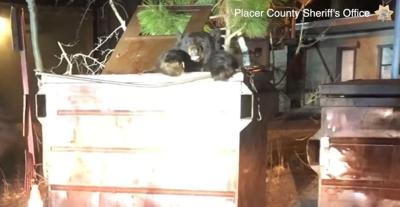
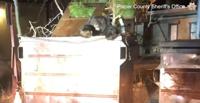
Placer County deputies had to free a black bear that got trapped in a garbage dumpster in Kings Beach, earlier this week. It was a large bear known to locals as T-shirt. Judging by his size, he hasn't been missing many meals.
"He makes the rounds," Hunt said. "He's in the neighborhood. He likes to scoot around to different garbage cans and sometimes he gets himself into predicaments like he did because of his size."
Hunt says they try to scare bears back into the wilderness by making loud noises and turning on their sirens. If they have to, they can use rubber bullets to sting the bear without penetrating its skin. He says people should keep their distance if they come across a bear.
"A lot of times, people come up there, they're really curious to see the bears but unfortunately, the bears aren't friendly," Hunt said. "They're scared of you but if you corner the bear, they will stand their ground."
People can also protect themselves in other ways.
"Make loud noises, make yourself tall, walk away slow," Hunt said. "If you run away, that's an instinct of the bear to chase you."
Most bears go into hibernation in November but Sanchez says some males will wait until December. The weather has been warm for this time of the year but she says that doesn't affect when bears go into hibernation. The availability of food is what decides their sleep schedule.
"When the food isn't available to them, that's when they go into hibernation," Sanchez said.
Hunt says this is the busiest time of the year for bear sightings. Once the bears go into hibernation, they won't reappear until spring. Then they will start getting more active again around October.