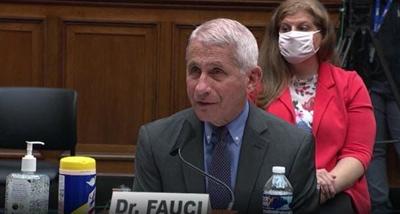


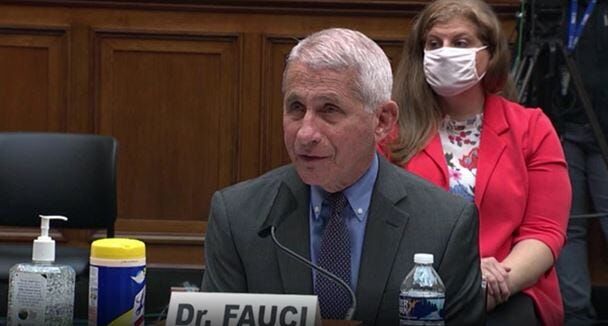
The government’s top infectious disease expert says he is cautiously optimistic that there will be a COVID-19 vaccine by the end of the year or early 2021, but warns that the next few weeks will be critical to tamping down coronavirus hot spots around the country.
Dr. Anthony Fauci and other top health officials also told lawmakers on Tuesday they have not been asked to slow down testing for coronavirus.
This is an issue that became controversial after President Trump said last weekend that he had asked them to do just that because it was uncovering too many infections.
Trump said Wednesday that he wasn’t kidding when he said that.
Dr. Fauci also said that he thinks the United States will be better prepared if the country has a second wave of coronavirus infections this fall and winter.
Fauci told members of the House Energy and Commerce Committee on Tuesday that the U.S. should have the ability to do 40 million to 50 million tests per month by that time, giving public health officials the ability to understand the dynamics of the spread of the virus.
The director of the National Institute of Allergy and Infectious Diseases says that supplies of masks, gowns and other equipment are also being replenished in the national stockpile, and U.S. production is being built up.
Fauci also told the committee he doesn’t regret that the American public wasn’t urged sooner to wear face masks.
Under questioning by Republican Rep. David McKinley of West Virginia, Fauci said there was a “paucity of equipment” that health care personnel needed early in the pandemic. Now, he says there are enough to go around.
McKinley asked Fauci if he thought President Donald Trump was being judged unfairly about his response to the pandemic.
Fauci said the question is unfair and replied, “I work in the White House, and I believe everyone there is doing everything" they can.
undefined
Meanwhile, the head of the U.S. Food and Drug Administration told House lawmakers he hasn't felt any political pressure from the Trump administration to make decisions related to therapies for COVID-19.
The FDA last week pulled its emergency authorization for hydroxychloroquine, a malaria drug aggressively promoted by President Trump for treating COVID-19.
The FDA in March initially green-lighted use of the drug but said new studies strongly suggest it doesn’t work against the disease caused by the coronavirus.
Hydroxychloroquine also can sometimes cause dangerous heart side effects. The FDA said that risk outweighed the drug’s unproven benefit for COVID-19 patients.
Democratic Congresswoman Anna Eshoo asked FDA Commissioner Stephen Hahn to immediately report any political pressure on the FDA to members of Congress. Hahn said he would.
The nation is emerging from weeks of stay-at-home orders and business shutdowns. But that's being done in an uneven way, with some states far less cautious than others.
(Copyright 2020 The Associated Press. All rights reserved. This material may not be published, broadcast, rewritten or redistributed.)