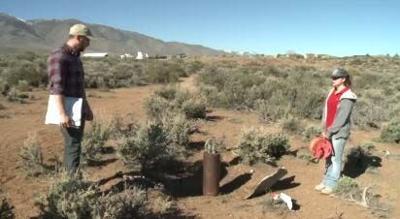
Friday is the first day of spring, closing out the fourth straight winter of dry conditions. While the drought is taking its toll on surface water -- it's also affecting groundwater. People around the state rely on groundwater for both domestic and agricultural purposes. The Nevada Division of Water Resources keeps an eye on those wells throughout the year, to observe the health of the basins. Wells, like the ones in Lemmon Valley, are measured, quarterly.
"There's ups and downs in the water levels," Shannon McDaniel, Water Resource Specialist said. "It just depends on how much precipitation we're getting, the snowpack, what kind of pumping is happening in the areas."
Despite the drought, the Lemmon Valley wells are right on par. Since January, water levels have gone up between three inches to more than a foot, depending on the well.
"You should see the water levels come up in the springtime, just because of the snowpack and melting," Kelvin Hickenbottom, Deputy Administrator for the Nevada Division of Water Resources said.
Since the drought started, some wells have dropped between one and three feet. Others have dropped as much as ten feet.
"Generally, when it's a real wet year, you'll see the water levels rebound pretty good and conditions like the last four years, in certain basins, water levels haven't recovered," Hickenbottom said.
Measurements are done by lowering steel measuring tape into the well, or by using an electric tape that sends a buzzing signal once it touches the water.
Out of 256 groundwater basins around the Silver State, about 130 of them are measured. While most agricultural wells are holding up, the municipal and domestic wells aren't rebounding quite as much.
"Their wells are generally drilled to a more shallow depth," Hickenbottom said. "They've been there for quite some time and with three to four years of drought, they've probably seen the greatest impacts."
This group says the water levels are nothing to be concerned with because they expect these kinds of fluctuations. Part of their reason for measuring the wells is to see how they hold up during different climatic conditions. Most of the wells along the sierra front are measured four times a year. Some of the more rural areas get measured once every six months.
