

The COVID-19 Mitigation and Management Task Force met, Thursday, to discuss a number of topics. The meeting comes ahead of a vaccine that could arrive by mid-December. In the meantime, it is discussing how to deal with hospital capacity. As the surge in COVID-19 cases and deaths surge, so do hospitalizations.
"The hospitals are feeling the strain but are currently managing the crisis and the stress," Dr. Chris Lake, Executive Director of Hospital Preparedness, Nevada Hospital Association said.
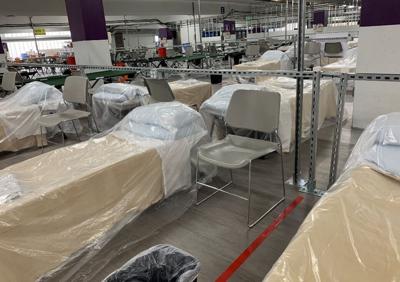
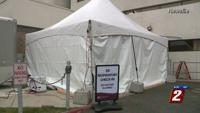
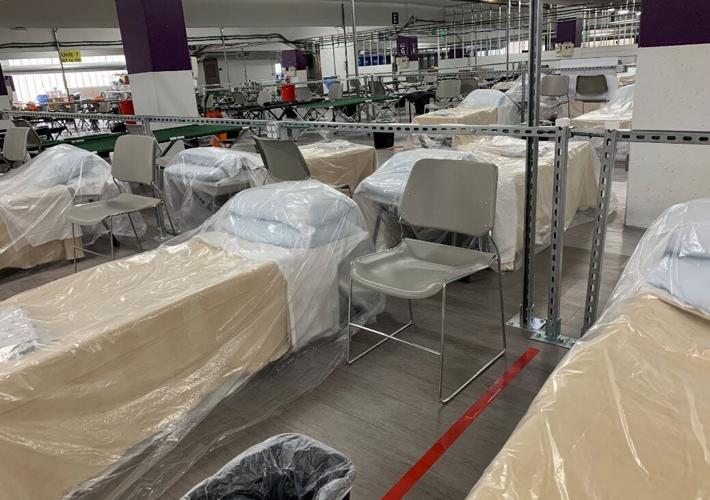
About 30 percent of Nevada's hospitalized patients have COVID-19. Lake says the hospitals are getting closer to capacity but that some have taken measures by adding space and temporary triage tents to handle incoming patients with respiratory illnesses. While many hospitals may have available beds, they may not have enough staff to handle the patients. Hospitals throughout the country are competing for traveling nurses, often at a cost of $180-$200 per hour.
"We had a nursing shortage prior to COVID," Lake said. "I just want to put that out there. So we started from a deficit and then we have the increase in patients, right now."
Officials say the state and hospitals have a stable supply of personal protective equipment. The only potential shortage is gloves but the Department of Emergency Management says it has 28 days worth in stock. Hospitals also have a healthy stockpile of PPE.
"Many of the larger medical centers are reporting that they have an excess of a year of available PPE on-hand," Lake said. "We've been making as many purchases as possible so that if there was another supply chain problem, we would not find ourselves behind the eight ball like what happened in April."
More people are going to the hospital but Lake says it is a backup of eligible discharge. Those are patients who are well enough to leave the hospital and go to a skilled nursing facility or a psychiatric or rehabilitation center. About 200 could leave the hospital each day but that is taking longer than usual. Lake says one of the possible reasons is that the secondary facilities are full.
As hospitalizations and deaths increase, the number of patients in the Intensive Care Unit is not going up as fast. Lake says there are many possible reasons for this but that they are mostly hypothetical explanations. One of those is the development of better therapeutics.
"We have learned more and more about what works and what keeps these out of the ICU," Lake said. "Although, like I stated, we are seeing a little bit of an increase in those ICU admissions, now."
When it comes to the rise in deaths without an increase in ICU patients, he says many older patients could be deciding to manage their finances and prepare for end-of-life care.
"They have no-code orders, things of that nature that preclude them from going into the ICU and they're taking hospice as an option, things of that nature," Lake said.
Schools and businesses are still feeling the effects of the pandemic. Jhone Ebert is the Superintendent of Public Instruction. She says the pandemic has created both an economic and a mental health crisis.
"Keeping children in school buildings is a key way to ensure that they're getting the support that they desperately need," Ebert said.
Ebert says the task force has an opportunity to rethink how it handles education during the pandemic. She says while the rate per capita is on the rise among children, the data shows that it is not happening in schools.
"State public health officials, including the State Biostatistician interprets this change primarily as part of the overall transmission in the community and not tied to in-person education," Ebert said.
Ebert says the economy cannot fully rebound until school buildings reopen. Many parents have to stay home from work to take care of their children during distance learning.
"If we're comfortable keeping bars, restaurants, gyms, retail establishments open, there's no reason we cannot create safe opportunities for students to have access to in-person learning," Ebert said.
Meanwhile, the Department of Business and Industry says most companies are in compliance with the state's restrictions. Officials say the percentage of those in compliance is in the mid to high 90s, with just a few exceptions.
"One of them is construction, mainly in southern Nevada where we have some low-compliance numbers but we're bringing those up and that has improved dramatically," Terry Reynolds, Director of Business and Industry said.
Reynolds says his department is working across many sectors to make sure businesses are in compliance, including manufacturing, mining, construction and a variety of different sizes of companies.
"We spent time, for example, with Mt. Rose Ski facility in terms of how they would develop their safety protocols," Reynolds said. "We also spent time with large retail operators, grocery stores, and the construction industry on how they can comply."
The state is adopting the CDC guidance on quarantine, as of Thursday. Instead of staying home for 14 days after exposure, people can quarantine for 10 days if they don't have symptoms.
"If someone's on quarantine, right now, and they were scheduled to end their quarantine on the 8th, they can now end their quarantine on the 4th if they have no symptoms and then they can return to work with no negative test required," Julia Peek, Deputy Administrator of Community Health Services said.
Nevada could receive its first doses of a vaccine by mid-December. The state expects to know its exact allocations for the rest of the year, either Thursday or Friday.