This year is a Leap Year, and it happens only once every four years. If you have a February 29th birthday, you can say your age is five when you are really 20 years old. The earth travels around the sun roughly 365.25 days a year. The extra quarter is accounted for every four years on February 29th.
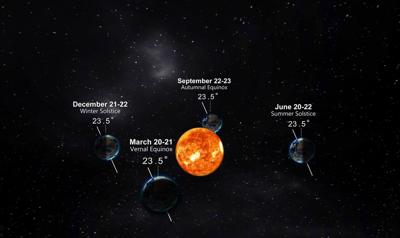
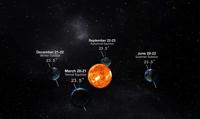
Seasons can be accounted for either astronomically or climatologically. The earth is tilted at a 23.5 degree angle and as it travels around the sun the sun’s rays hits the earth from a perpendicular angle in different spots. This is what causes astronomical seasons. In the winter the sun’s rays are moving from 23.5 degrees south to the equator and in the summer the sun’s rays are moving from 23.5 degrees north to the equator. The seasons have nothing to do with how close the earth is to the sun, but rather where the sun’s rays hit the earth’s surface. The sun's angle increases during the wintertime and decreases throughout the summer.

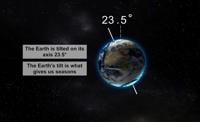
While there are four seasons with nearly equal days in each, the spring and fall seems much shorter than summer and winter. Astronomically speaking, the beginning of winter is not too much cooler than the end of winter. This is the same for summer too. As the ground is cooling, it is offset by the rising sun angle. This also causes the spring and fall seasons to feel as if they pass by much faster than winter or summer.
Climatological seasons are based on when temperatures start to change. Summer is June through August, winter is December through February, fall is September through November, and spring is March through May. Climatological seasons are based on data or weather history. If you’re anxious for spring, climatologically speaking we have one more month of winter left. Astronomically, the first day of spring is Thursday March 19th.