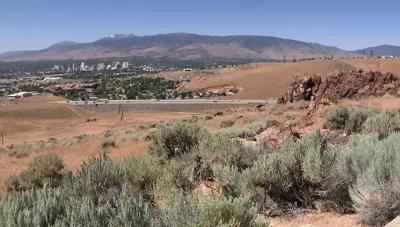
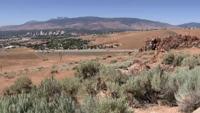
This year's fire season is in full gear. We need more moisture and less wind.
"We just haven't really had a big monsoon push of thunderstorms into the region quite yet," said meteorologist Chris Smallcomb.
So some rain would be nice. This past June was not record breaking by any means, but we did have slightly more evaporation occur than years' past.
Part of this is due to our wet spring.
"We've had this rapid transition of the month of May to June from moist conditions in the spring to dry in June and July," said Smallcomb.
The quick change in seasons may influence your perception of how dry we are this summer. Compared to 2015 and 2014, it does feel a little bit less humid. Especially at night.
"But what typically happens is that humidity recovers, it goes back up at night sometimes above 50%," added Smallcomb.
Relative humidity values are usually their lowest in the afternoon at the heat of the day.
"It's a big impact on fires," said Smallcomb.
We were in the low teens most of the day on Wednesday. Making for an interesting afternoon at the Weather Service in north Reno. The behavior of the fire near the "S" in Sparks was able to change Wednesday evening because the relative humidity got higher, winds got lighter and temperatures cooled. Which is what we needed.
However, there have been several nights this summer where we failed to get that recovery in humidity levels.
"That can keep fires more active at night than it otherwise would be," said Smallcomb.
Red Flag Warnings are posted for Friday afternoon through early Saturday, so make sure to stay fire aware and be extra cautious.