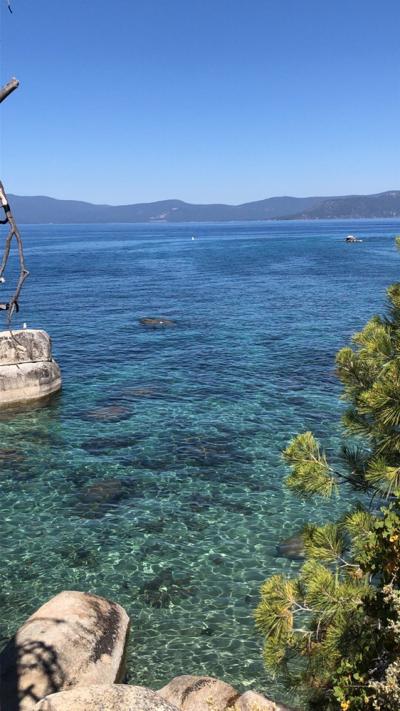
Lake Tahoe’s fluctuating clarity got worse last year during an especially cold and wet winter.
Scientists say sedimentation, algae growth and a tiny invasive shrimp continue to pose restoration challenges for the famed clarity of the mountain lake straddling the California-Nevada line.
The clarity decline came a year after the lake registered improvement from its worst clarity level in a half-century.
Climate change continues to drive long-term trends, with rising air temperatures and less precipitation falling as snow.
The surface water temperature in Lake Tahoe has generally been on the rise since at least 1968, when measurements first began.
(Copyright 2020 The Associated Press. All rights reserved. This material may not be published, broadcast, rewritten or redistributed without permission.)