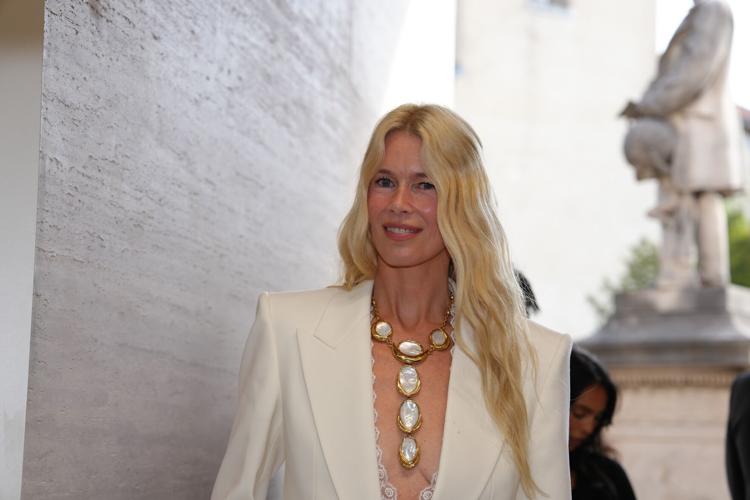









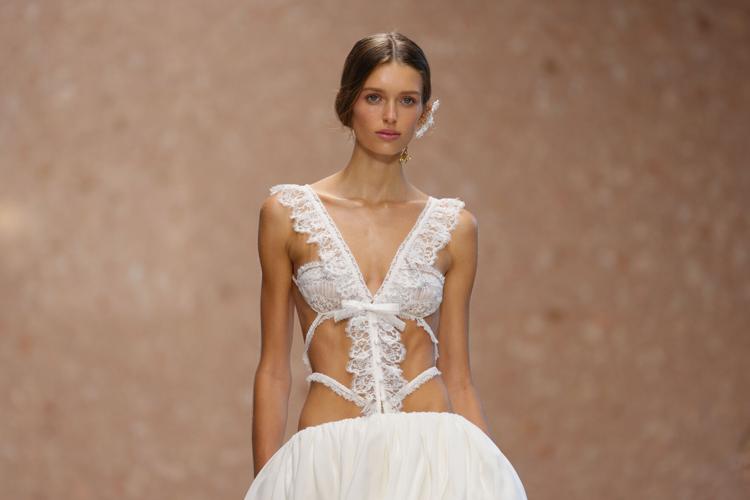
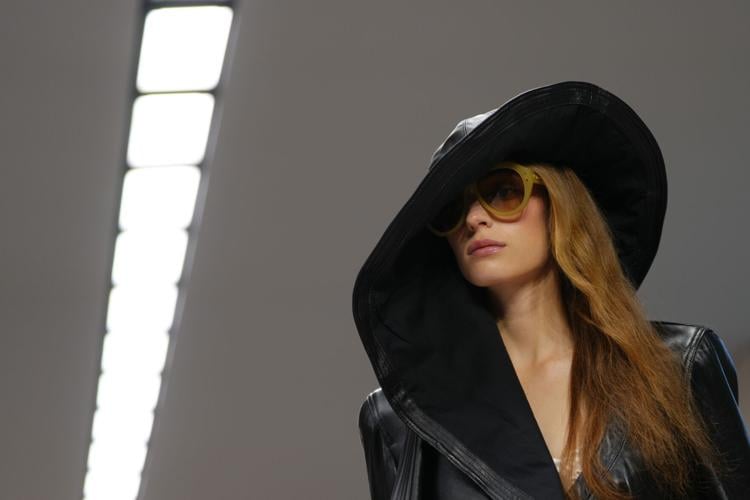
PARIS (AP) — Claire Danes, Cynthia Erivo and Claudia Schiffer joined the morning crowd at the 17th-century Paris Observatory on Thursday as Chloé sent lingerie, lace and fishermen’s coats down the runway at Paris Fashion Week.
The show came at an uneasy moment for luxury: cosmetics giant L’Oréal overtook Louis Vuitton owner LVMH as France’s most valuable listed company in September. And consultants forecast modest growth in personal luxury goods this year after two years of contraction.
Designer Chemena Kamali returned to Chloé’s archives for her spring-summer 2027 “Obsession” collection.
It was a personal declaration of affection for the house — and a test of how much decoration its promise of easy dressing could bear.
Luxury, ready to wear
Gaby Aghion founded Chloé in Paris in 1952, pioneering luxury ready-to-wear: finely made designer clothes sold ready-made, rather than couture created for individual clients.
The idea helped bridge exclusive dressmaking and mass production, offering luxury with less formality.
That inheritance sets a demanding standard: elaborate workmanship should not make the clothes look difficult to wear.
“I wanted something deeply personal — to return to things I love, the emotions they trigger in me,” Kamali said.
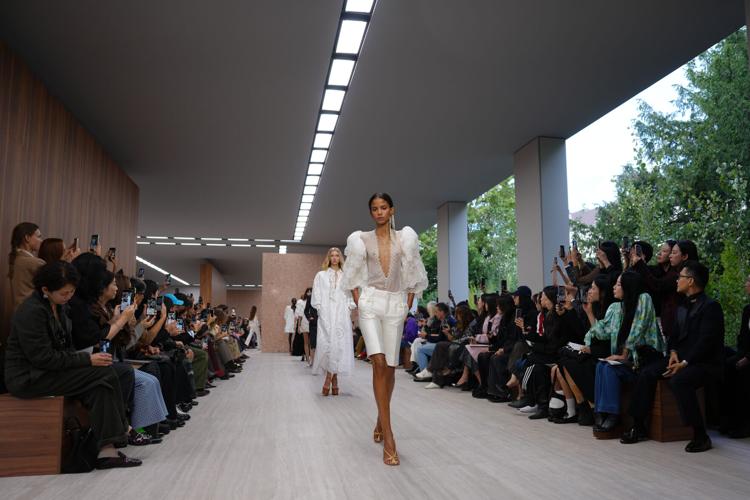
Broderie anglaise — embroidery punctuated by small decorative holes — appeared on crisp cotton and sheer organza.
Kamali traced the patterns to 19th-century needlework, while raised floral embroidery recalled the 1960s. Puffed sleeves, tiered ruffles and swinging tassels added volume and movement.
At times, flowers, lace and tassels competed within a single look.
The workmanship impressed, but the result could feel crowded: a lot of visible effort for clothes meant to suggest ease.
Lingerie offered a leaner proposition. Kamali cut away lace to create what she called “romantic harnesses,” framing exposed skin with delicate lines.
A metallic bust strap added a hard glint among the floating fabrics.
These pieces needed fewer flourishes to command attention.
Romance meets rainwear
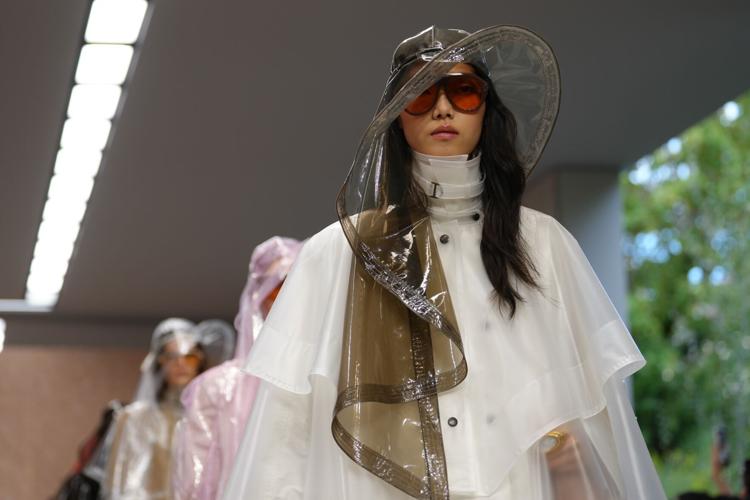
The coats supplied the collection’s most convincing change of pace: reds and yellows interrupted the softer colors, while wide-brimmed hats pushed the proportions toward the theatrical.
Fishermen’s coats and capes provided the starting point.
Kamali layered transparent vinyl in smoky shades over her silhouettes, bringing sharper outlines to the collection’s softness.
Here, the contrast worked. Substantial outerwear gave the delicate clothes a counterweight, and the bold shapes carried the drama without requiring another layer of ornament.
Tailoring brought further definition. Kamali cited Chloé’s scalloped 1972 “Noël” tuxedo as a reference, revisiting the house’s history of adapting men’s suiting for women.
It offered a firmer framework for her romantic instincts, and her affection for Chloé was clear.
The strongest moments came when that familiarity produced a clear idea: a fisherman’s coat expanded to dramatic proportions, or lingerie stripped back to its outlines.
Those transformations gave the collection direction.