



NEW YORK (AP) — As the High Holy Days approach, rabbis in the United States say their congregations are deeply unsettled by antisemitic threats and aware of sharp divisions in their own communities. But many are also determined to embrace the coming days of celebration and reflection.
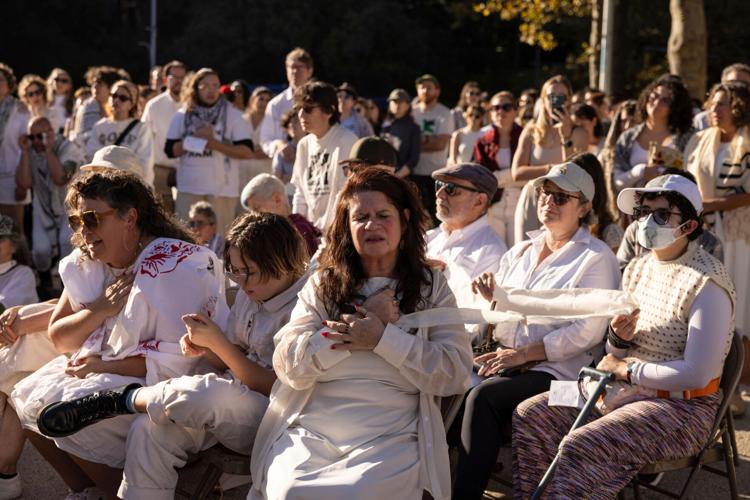
“Jews feel extremely precarious right now,” said Rabbi David Ingber, founder and spiritual leader of Romemu, a fast-growing, nondenominational Jewish congregation in New York City.
Ingber says many of his congregants are politically liberal and opposed to Israel’s policies on Gaza and other issues, yet are troubled by vehement assertions that Israel has no right to exist as a Jewish state.
“Most of us see Israel as an ancestral homeland,” he said. “What’s disconcerting — we’re being told our own sense of history is illegitimate.”
Adding to unease, he said, is an upsurge of antisemitic and anti-Israel sentiment coming from the political right, augmenting the deep-seated anti-Zionist views of many on the left. In aggregate, Ingber said, “it is the worst uptick of antisemitism we’ve seen in my lifetime.”
“There’s a sense of absolute vulnerability,” he added. “We’re not sure where we belong.”
Ahead of holy days, webinars and training on response to threats
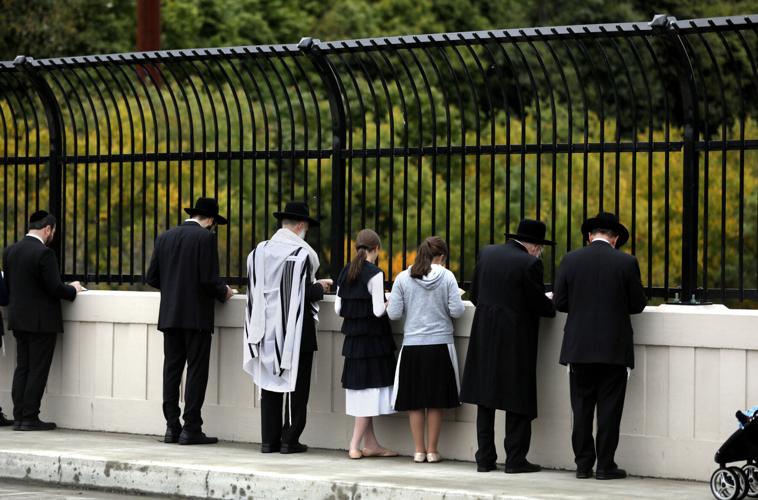
The High Holy Days begin at sundown on Friday with Rosh Hashana, the Jewish new year; it will be observed until nightfall on Sunday. A week later comes Yom Kippur, the Day of Atonement, which is widely considered the holiest day in the Jewish calendar. This year, it is observed from sunset on Sept. 20 until after nightfall on Sept. 21.
Ahead of the Holy Days, the Secure Community Network, which provides safety advice to Jewish institutions throughout North America, has been offering security webinars and in-person training on how to respond to active threats.
“Hope is not a strategy,” said Michael Masters, the SCN's national director and CEO. “It's about preparation, training individual members of the community, getting everyone engaged.”
Masters said the network’s task has become more complicated as antisemitic threats surface from a wider variety of domestic and foreign sources — ranging from proxies of Iran to white supremacists in the U.S.
“People are looking for who is the enemy, and it’s not an easy answer who’s behind the increase of anti-religion hate crime,” he said.
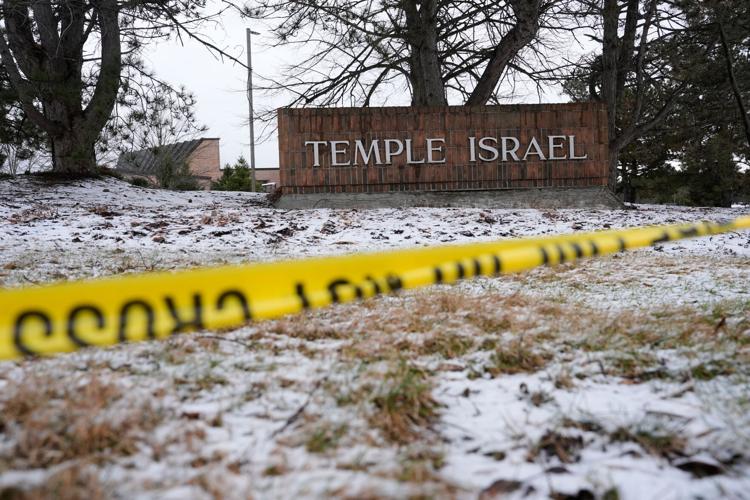
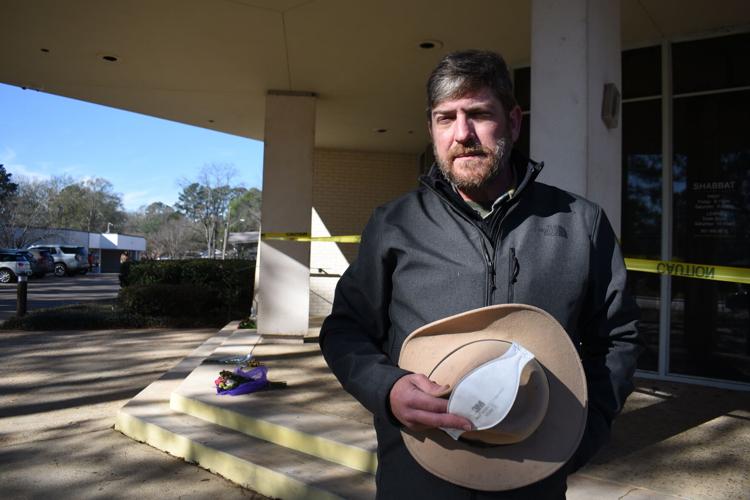
Violent attacks targeting U.S. Jews this year include an August assault at a Manhattan synagogue, a March truck-ramming at a temple in West Bloomfield, Michigan, and a January arson attack on a synagogue in Jackson, Mississippi.
Yet even as Jewish leaders across the political spectrum condemn such incidents, the broader Jewish community is riven by divisions related to Israel’s role in ongoing Middle East conflicts. Notably, about 3 in 10 Jews in the U.S. say Israel has committed genocide against Palestinians, according to a recent survey by The Associated Press-NORC Center for Public Affairs Research.
Intra-Jewish divisions are a major concern
Masters says it's clear that events in the Middle East can affect the “threat environment” in the U.S.
“But more broadly, the community understands this threat is the continuation of well over 3,500 years of threat,” he added. “It's fundamentally about hatred of the Jewish community.”
Noting that some Christian churches also have faced recent violent attacks, Masters says there may be an opportunity “for all of us as faith groups to come together.” And similarly, he said efforts to improve security could be a “unifying component” for the different branches of U.S. Judaism.
“Our adversaries do not distinguish between Orthodox, Reform, Conservative,” he said. “We would be very wise to understand that as a community we are strongest when we stand as one.”
Ingber also addressed intra-Jewish divisions.
“We should create a space to hold differences, to be together with all of our differences,” he said. “There is a grave danger of schism around the Jewish people and its relation to the state of Israel. It's being weaponized.”
“Rabbis will have to try to speak into this space,” he added. “You don’t want to get up in the High Holy Days and speak of division.”
This year’s Holy Days will be a time of powerfully contrasting emotions, said Rabbi Rick Jacobs, president of the Union for Reform Judaism — an umbrella group for more than 800 Reform synagogues in North America.
He noted that the Hebrew name for the Holy Days can be translated as “the days of awe” or “the days of fear.”
“The fear is genuine,” Jacobs said. “People are fearful in many cases to be publicly expressing their Judaism.”
“At the same time, we are human beings who crave the majestic dimension of these High Holy Days — the beauty and possibility of the new year,” he added. “You have to hold both of these at the very same moment.”
Divisions within the Jewish community “are pronounced,” Jacobs said. “Parents and grandparents may have one view of Israel. Their children may have very different ideas.”
Jacobs said one challenge for his movement is emphasizing “the connectedness within and beyond the walls of our congregations.”
An appeal to Congress for more security assistance
Ahead of the Holy Days, major Jewish organizations have called on Congress to allocate $1 billion — triple the current allotment — to help houses of worship and other nonprofits harden their physical security.
Among those urging the funding boost is Nathan Diament, executive director of the Orthodox Union Advocacy Center, representing the nation’s largest Orthodox Jewish umbrella organization.
In a commentary for Jewish News Service, he said annual funding for the Nonprofit Security Grant Program had grown from $10 million in 2004 to $300 million in 2026. But the increase has not kept pace with the demand, he wrote, with only 20% of the more than 8,000 nonprofit applicants receiving funds last year.
“With the High Holidays around the corner, millions of American Jews will attend synagogue with a sense of trepidation … because sitting in synagogues for hours at a time makes us think about the attacks that have occurred.”
Associated Press religion coverage receives support through the AP’s collaboration with The Conversation US, with funding from Lilly Endowment Inc. The AP is solely responsible for this content.