


UPDATE: June 2, 2021
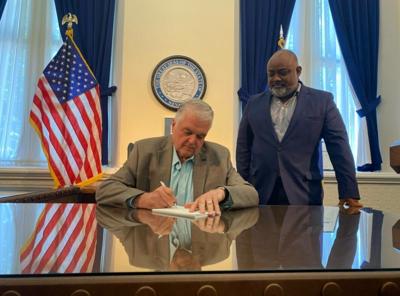
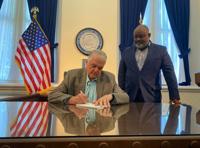
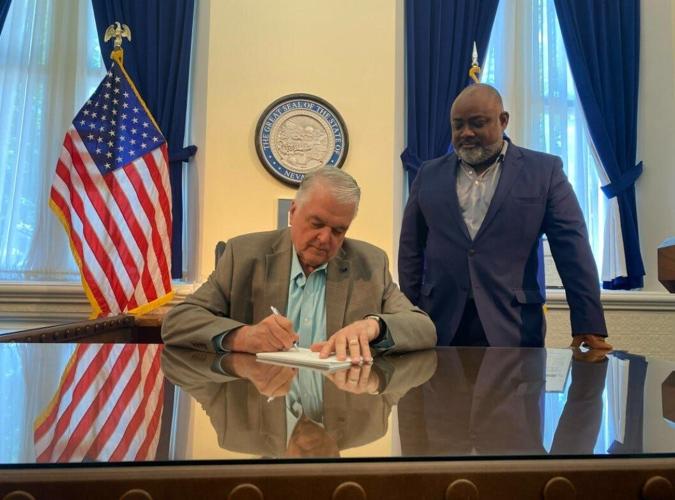
Governor Steve Sisolak has signed AB321 into law, making Nevada the sixth state to adopt a permanent vote by mail system.
The bill was sponsored by State Assembly Speaker Jason Frierson and Assemblywoman Teresa Benitez Thompson.
AB321 requires all county and city clerks to send every active registered voter a mail ballot before a primary or general election.
“At a time when State legislatures across the country are attempting to roll back access to the polls, I am so proud that Nevada continues to push forward with proven strategies that make voting more accessible and secure,” said Sisolak. “Nevada has always been widely recognized as a leader in election administration and with this legislation, we will continue to build on that legacy.”
“I’m proud of the work we did to expand access to the ballot box for all eligible Nevadans. As John Lewis said, voting is the most powerful non-violent tool we have in a democracy, “ Speaker Frierson said. “While other states across the country move to make voting more restrictive, Nevada shines as a leader in protecting this fundamental sacred right. I’m honored to have played a part in expanding the freedom to vote in our beloved state.”
UPDATE: May 31, 2021
The Nevada State Senate has AB321, enacting a measure to provide universal mail-in ballots.
The bill now heads to Governor Sisolak's desk. If he signs it, every active voter in the state will receive a mail-in ballot automatically.
UPDATE: MAY 26, 2021
The Nevada State Assembly has passed a measure to provide universal mail-in ballots.
Assembly Bill 321 passed along party lines on Wednesday and now heads to the Senate.
If approved and signed by Governor Sisolak, every active voter in the state would receive a mail-in ballot automatically.
Anyone who doesn't want one can opt out.
Supporters say these ballots increase options for voters. Opponents say the cost is too high.
As we've reported, the plan is projected to cost $6.8 million in the next election cycle.
------
ORIGINAL STORY: APRIL 1, 2021
The Assembly Committee on Legislative Operations and Elections could make universal mail ballots permanent in Nevada. The bill's sponsor says it will make voting more accessible.
"Citizens can review the ballot at home, take all the time they need to study the issues," Assem. Jason Frierson, D-Las Vegas said.
Lawmakers passed AB4 during the 32nd Special Section because of the pandemic, enacting the policy for the first time. A record 78 percent of Nevada's voters participated in the 2020 General Election. 40 percent of them voted by mail.
"This further expands the opportunity for eligible Nevadans who want to take part in the election process to make their voice heard," Frierson said.
Other lawmakers have voiced opposition to making universal mail ballots permanent. They say voter confidence is very low because of the perception of voter fraud and problems in the postal system.
"The most common problem I heard in talking with voters in the last election, I talked to a great many of them, was the issue of ballots showing up at their homes, intended for people who did not live there," Assem. Andy Matthews, R-Las Vegas said.
If the bill passes, voters could opt out, up to 60 days before the election, to avoid receiving a mail ballot. People would be allowed to vote by mail or drop off their ballots. They could also choose to vote in-person either early or on election day.
55 percent of Washoe County's voters cast a mail ballot in November. Officials say they were able to handle the increased number of paper ballots but that if AB321 passes, they would have to make some improvements.
"We need space to properly handle the ballots and store them securely," Deanna Spikula, Washoe County Registrar of Voters said. "We need work stations for those people who are checking those ballots in and verifying signatures."
Spikula says 15-20 percent of voters use absentee ballots in a typical election. More people have been requesting them as the county's population grows.
"We see the increase in people liking the access and wanting to vote by mail but we still, at least up here in the north, we still have a lot of our voters who prefer to appear in-person," Spikula said.
The bill would also allow counties to purchase signature verification equipment. It would require the secretary of state to work with the Bureau of Vital Statistics on a monthly basis to identify people who have passed away to remove them from the voter roles.
Mail ballots would have to be postmarked by election day. Ballots could be received up to four days after the election. People will be allowed to rectify signature verification issues on ballots up to six days after the election.
Voters are split on whether they want to continue with universal mail ballots.
"I think it's crazy," Brian Jenks, Reno resident said. "There's too much room for fake, fraud, multiple voting. I think people ought to have an ID."
"Personally, I think it's easier for everybody," Aireana Collins, Reno resident said. "I mean, my husband, he voted for the first time."
"You don't know who the hell voted," Ivan Pfennig, Sun Valley resident said. "You just got a box with a bunch of envelopes in it that they tossed and said 'Oh that was from him or that was from her.'"
"It's probably a good idea for people that are disabled or that have some reason that they can't make it to the voting booths," Donald E. Newman said.
The bill will still allow a third party to deliver a ballot for another person. If that third party does not deliver the ballot within three days, it would be a Category E violation. The legislation would also require a minimum number of in-person polling locations.
Citizens gave testimony in favor and opposition to AB321 for 90 minutes during the hearing.