




The Affordable Care Act (ACA), also known as Obamacare, was signed by President Barack Obama on March 23rd, 2010. Saturday marks the 14th anniversary of the landmark legislation.
We spoke to Nevada Democratic Party Chair Daniele Monroe-Moreno about how the law makes health insurance a reality for hundreds of thousands of Nevadans who previously could not obtain it through an employer.
A monumental change in the American healthcare system, the law created the Pre-Existing Condition Insurance Plan (PCIP) to provide coverage to those previously denied by private insurance companies due to pre-existing conditions.
"Talking to families in my community, if you sneeze or thought you might have a cold, moms like, well, your fever is not too high, you can't go to the doctor, we can't afford it. And, it wasn't until the fever was skyrocketing, a family member couldn't move, that you go to the doctor, you could find out you have cancer or diabetes, where they could have caught it two months earlier or a year earlier when it was stage one now it's stage four. Now you're planning not only how to treat that but also how to put together end-of-life plans," Nevada Democratic Party Chair and Assemblymember Daniele Monroe-Moreno.
On the campaign trail this year, former President Donald Trump pledged to repeal the ACA if elected for a second term. However, the effort to dismantle the program is unpopular among many Republicans in Congress, according to The Hill.
"I would like to terminate Obamacare, come up with a brand new, beautiful health care,' Trump said at the debate moderated by NBC News' Kristen Welker."
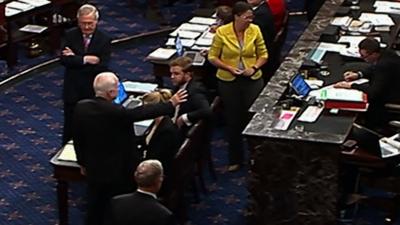
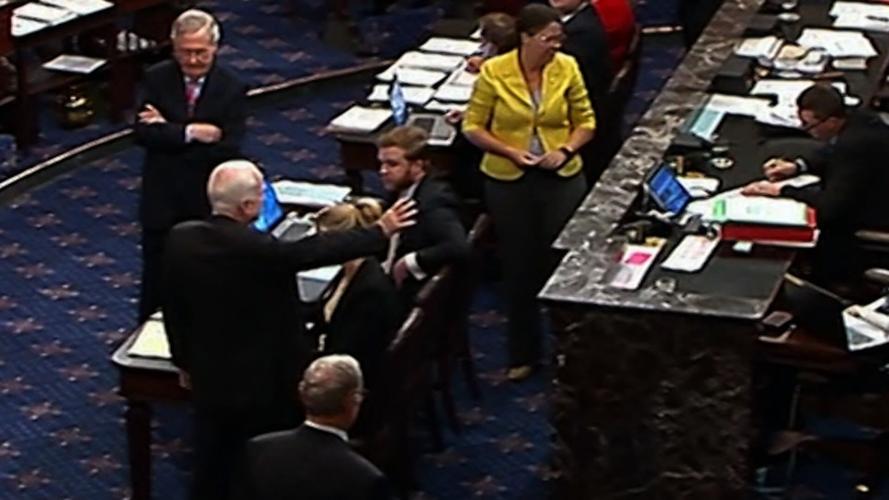
As President in 2017, former President Trump led a failed effort in Congress carried by former House Speaker Paul Ryan to repeal the ACA, with a tie-breaking vote from the late Republican Senator John McCain to block it.
"We've had over 21 thousand families in [Nevada] who signed up just this year, and we only have ACA because there was one vote in the Senate that made sure we had it, and the fact that there is a push to take healthcare away from our seniors, away from children, away from pregnant mothers at a time in a country where maternal is still an issue, and a conversation about taking healthcare away is just unimaginable," said Monroe-Moreno.
Congresswoman Susie Lee Touts Record ACA Enrollment
Here is a sample of data showing how Nevada Democrats say a repeal of the ACA would impact Nevadans.
-31,000 Nevadans could see higher premiums.
-600-thousand women in Nevada would lose access to free birth control.
-487,000 Nevadans with pre-existing conditions could lose access to critical protections.
As part of our ongoing coverage, we consulted the conservative think tank, The Heritage Foundation, to understand their perspective. One of their main grievances is that ACA plans are generally more expensive than other types of coverage, including group health insurance through an employer. Additionally, they argue that the ACA reduces competition in the marketplace, resulting in lower-quality healthcare and fewer health plan options.
"It limits the choice that you have of different types of health insurance; as I say, competition in the system has declined. Plan options have declined, choice has therefore declined, and it has not controlled cost," said Heritage Foundation Health and Welfare Studies Senior Research Fellow Bob Moffit.
House Republicans, on the other hand, have tried to repeal the ACA more than 50 times. They argue that the law has caused many counties across the country to offer just one healthcare provider, which they argue has created monopolies, and drives up premiums.
In the meantime, Democrats argue that the contingency of Republicans who are calling to repeal are merely reacting and not proposing solutions.
"We have 453 thousand Nevadans with children who would lose their coverage, and I don't think we as a state could afford that. There's not a backup plan in our state budget to take over for that," said Monroe-Moreno. "If you're going to replace the ACA, what policy are you going to provide for Nevada residents, for my seniors, for moms and babies? What policy? What plan?"