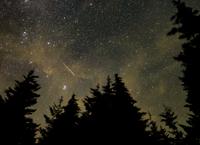
Photo Credit: (NASA/Bill Ingalls)
The photo to the right is from NASA/Bill Ingalls.
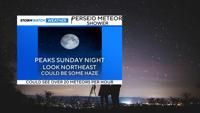
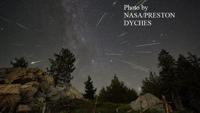
Space will put on a show Sunday night into early Monday morning, as the Perseid Meteor Shower reaches its peak event on our side of the globe.
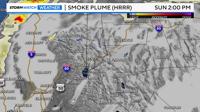
Skies will be clear in western Nevada, unless some smoke or haze moves in, which is possible. The flow is out of the southwest, which is favorable for smoke to move in from the Crozier Fire, however, winds have stayed strong enough this weekend to mix up the air.
Wind speeds are forecasted to be stronger on Sunday and Monday, so make sure to stay fire aware.
The best time to see the meteor shower is after midnight, when the sky is at its darkest. Over 20 meteors could be seen per hour.


The meteor shower occurs as the earth travels through leftover debris from the comet Swift-Tuttle. According to NASA, the timing is great, as the meteor shower will begin to peak just as the moon sets. The darker the sky, the greater the show will be. The Perseid Meteor Shower happens every year, with the number of meteors varying each time. Some years could produce up to 100 meteors per hour.
The Perseid Meteor Shower is also known for its fireballs. A fireball is bigger than a typical meteor streak, and lasts longer too. They occur when the earth goes through bigger pieces of leftover comet material than meteors do. Fireballs are usually brighter than meteor streaks as well. This is according to NASA. Interesting to note, the comet Swift-Tuttle takes 133 years to go around the sun just one time.

If you can’t see the meteor shower on Sunday there will be a couple other events this month, including a conjunction of Mars and Jupiter on August 14th. You’ll also be able to see the team of the moon, Jupiter, and Mars about an hour before sunrise on August 27th in the eastern sky.