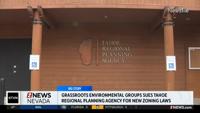



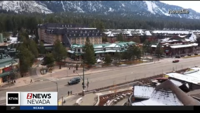
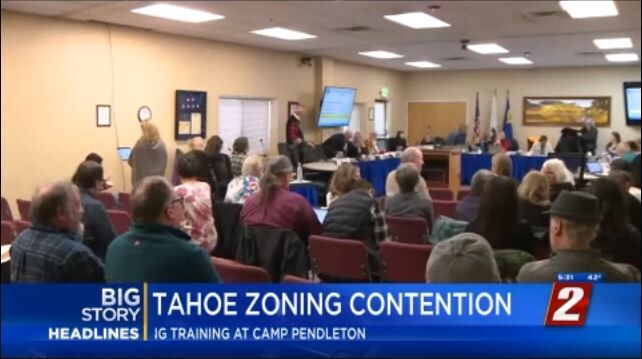
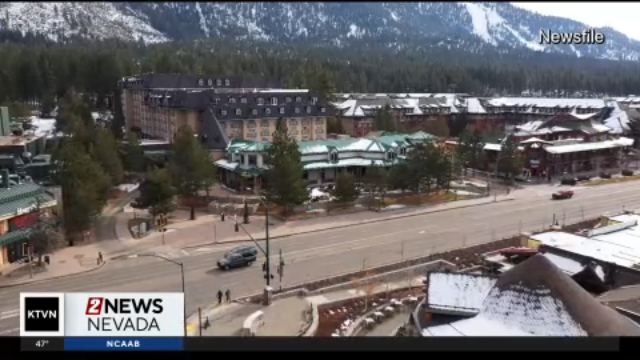
In December, it was reported that the Tahoe Regional Planning Agency (TRPA) had approved new land-use rules allowing greater flexibility for developers. The new rules would permit the construction of buildings with higher density and height in town centers. However, Mountain Area Preservation (MAP), an environmental group, filed a lawsuit against TRPA to revoke these amendments.
MAP Advocacy Director Sophia Heidrich stated, "The environmental watchdog needs watching" as the group believes that TRPA violates its 55-year-old Tahoe Regional planning bi-state Compact. Furthermore, they also take issue with the fact that TRPA has not performed a regional environmental impact statement since 2012.
Heidrich added, "We have to know that we're going to protect scenic resources, water quality, and community character. And without having that analysis in place and without going through that due diligence, we don't know what those impacts are going to be, and we can't mitigate those impacts."
TRPA's Public Information Officer Jeff Cowen explains that the agency is in a new mode that people need to become more accustomed to. The agency is pushing to get more projects forward to create environmental redevelopment. "There are certain environmental quality markers that we have not been making enough progress on for quite a while, and environmental redevelopment is exactly how we're going to get to a lot more water quality improvements," said Cowen.
TRPA argues that new development will spur environmental redevelopment, particularly when updating outdated buildings built in town centers before strict environmental standards were established in the basin. "This is an area where 72% of the pollutants that are affecting water quality are coming from urban upland areas, so these are areas where reinvestment is really needed because these are very expensive water quality measures," said Cowen.
MAP says the lawsuit is necessary to ensure TRPA fulfills its duties outlined in the Compact, a congressionally approved agreement between California and Nevada in 1969. Under the Compact, TRPA must ensure that new development will not exceed or impede environmental threshold carrying capacities adopted to protect water quality, air quality, and scenic views.
"Part of what this lawsuit is challenging is saying no, you do need to go back and do your due diligence, and we also need to understand where we are on these environmental thresholds and if we're out of attainment, how can we make good decisions to be better stewards," said MAP Executive Director Alexis Ollar.
Another critical element is whether new development will substantially increase affordable and achievable housing. Fifty percent of the workforce, "the missing middle," must commute from outside Tahoe, contributing to environmental impacts. We will dig further into this element of the story in future coverage.