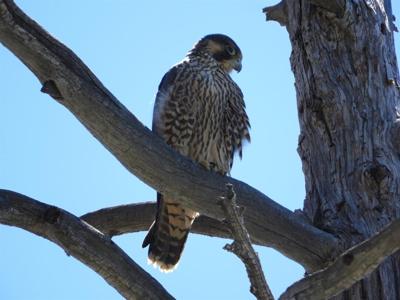
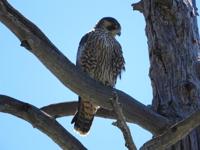


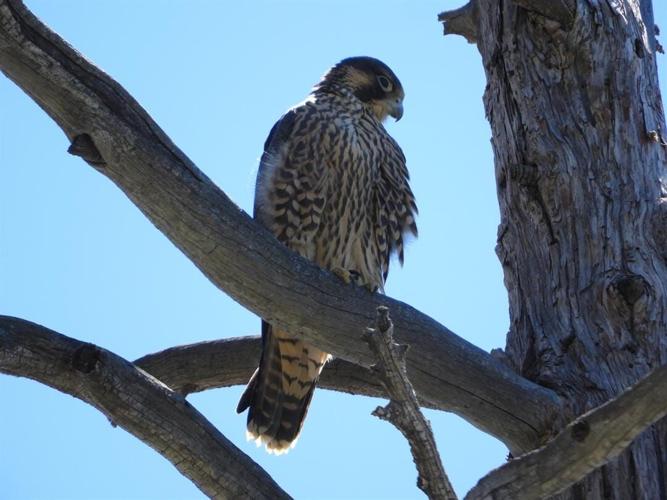
Peregrine falcons have returned to the Lake Tahoe area in recent years.
"This is a very interesting species for Tahoe Regional Planning Agency because they'd not been seen in Tahoe for over 40 years," said Jeff Cowen with TRPA. "In 2008, they started to return and nest in certain places."
One of those places is Castle Rock, which is also a popular hiking destination - and that took a toll.
"We noticed the falcons were sometimes under stress and we thought it came from people hiking above the nest where they could see and make eye contact with the falcons while they were trying to fledge their young," Cowen said. "The really tragic consequence would be them leaving their young in the nest to perish."
That's happened before. But this year was different. Local groups worked together to put up signs and monitor the trails during the nesting period.
"We worked with a broad coalition," Cowen said. "The Tahoe Institute for Natural Science, the Tahoe Climbing Coalition, many public and private partners, to see how we could continue letting people enjoy Castle Rock without disturbing the falcons, and giving them a proper, peaceful home."
This year, all three young falcons left the nest, to join the other birds that make their home near the lake.
"I hike every day," said longtime Stateline resident Arthur Howard. "And I enjoy the fresh air, lots of nature, lots of birds to see; eagles and osprey and horned owls, it's just great."
Peregrine falcons are known as the fastest animal on earth - National Geographic clocked the top speed of one of their dives at 242 miles per hour. And their continued success here depends on visitors and locals alike.
"The wildlife in the Tahoe Basin existed long before we did, so it's up to us to really be good stewards," Cowen said.
It's something that's second nature to those that live there.
"Just respect this area and each other, and pick up after yourself; it's not that hard," Howard said.
Tahoe Institute for Natural Science: www.tinsweb.org
The Tahoe Fund: www.tahoefund.org.