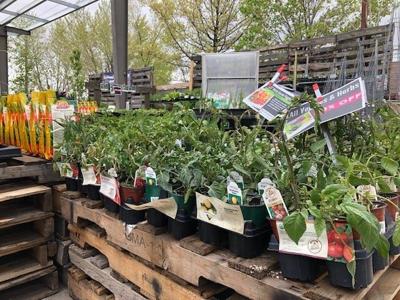
All it takes is one freeze to ruin someone's garden, and a spring freeze is coming on the night of April 30th.
Thankfully, there are plenty of options available to keep your flowers and veggies safe.
At Moana Nursery, there are products called fleece jackets and frost covers that can go over your plants to keep them warm.
In fact, you can even use a bed sheet if you don't want to spend any money.
Whichever option you choose, you'll need to act quickly, because the last thing you want to do is wake up to a dead garden.
"If you can bring your pots into your garage or in your house for a couple of days till this passes that would be a good idea,” says Rick Clark with Omega Landscape Solutions
If you can't bring them inside, or don't use one of the defensive products, you might have to kiss your tomatoes goodbye during Tuesday night's hard frost.
"The tomato plant may die and it will recover, but it takes a month, month and a half to recover from that kind of injury,” says Jon Bruyn, plant doctor with Moana Nursery.
Here in Northern Nevada, we don’t have that much time. We're known to have a short 90 to 100 day growing season in this climate.
In fact, this short time window, and April’s deceivingly warm weather is likely why people are already gardening.
“It's tough to avoid a temptation getting those warm temperatures and the nurseries are full of flowers,” says Clark. “Almost without failure, we have a late frost and people are going oh my god what do I do now.”
Of course, as the old adage goes around these parts, when in doubt, “Don't plant tomatoes until the snow is off of Peavine,” says Clark.
It's important to note that it's not just plants, but your hoses and pipes are also at risk during a hard freeze.
"We want to recommend people disconnect any hoses that they have outside, as well as cover any back flows or exposed part of their irrigation with an installation cover,” says Laine Christman, a conservation supervisor with the Truckee Meadows Water Authority.
If you don't pull the hose off during a freeze, you could break the outside spigot or damage the hose itself, and the same goes for other exposed pipes.
Beyond that, you should be in the clear during a one night freeze in spring.
In fact, TMWA is not recommending that people winterize their sprinkler systems on the 30th, saying most of the irrigation runs two feet beneath your lawn which puts it under the frost line.
This means, that the current temperatures of the ground should be warm enough to keep the pipes intact.
Despite that being the case, it's still a good idea to give the system a test run after the storm passes.
“After the freeze is done, run your sprinklers and check for any leaks or breaks that may have occurred during the freeze,” says Christman.