

Nevada has the highest number of abandoned mines in the nation. The state is famous among outdoor enthusiasts due to the availability of public lands for recreational activities. However, abandoned mines pose a significant threat to people who venture out for recreation, and the Nevada Division of Minerals, responsible for mine reclamation, has indicated that it will take at least four decades to secure all the abandoned mines with their current budget and workforce.
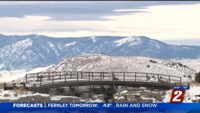
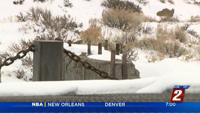
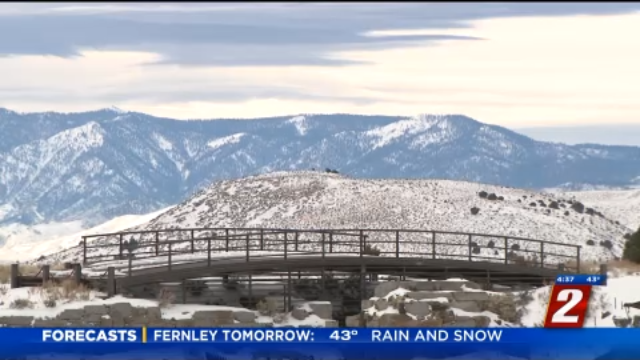
We went to the Foreman Shaft Mine near Virginia City, built in the early 1880s. The Division of Minerals Abandoned Mine Land (AML) program and the Bureau of Land Management (BLM) collaborated on a reclamation project worth $450,000. They installed a steel grate, a cupola, over a hazardous mine shaft extending more than 2,000 feet below ground. There are thousands of open minds just like this one distributed throughout the landscape.
"At this point, we know about 25 thousand abandoned mines that are open in rural Nevada. We closed off about 19 thousand of them, and we estimate that there are at least 100 thousand more. Every county has numerous historic mine districts in it," explained Nevada Division of Minerals Abandoned Mine Land Chief Sean Derby.
There have been instances of mine collapses and fatalities from people falling in mines. The latest reported death was in 2011, when a man fell to his death from a height of 190 feet. Since 1961, when the state first began recording, 19 individuals have died in abandoned mines, and scores of people and dogs were seriously injured.
These mines contain undetonated explosives and poisonous gas deposits, which can result in instant death. Moreover, the mines are home to potentially dangerous animals such as rattlesnakes, mountain lions, rodents, and bats carrying the deadly hantavirus.
If you ever encounter an abandoned mine, the Division of Minerals Abandoned Mine Lands (AML) program has signage and a protocol to guide you.
"If you do see an abandoned mine and you see one of our 'Stay Out Stay Alive' signs, that's great. If you don't see a sign and it appears not to be secured, they can call the division or email us a photograph and a description of where it was," explained Derby.
The Division of Minerals advises you to look at Google Earth before going out so you know where hazards are; features will also allow you to identify a hazardous area quickly.
"When you're going out and recreating and doing four-wheel drive an area when you start seeing what looks like fresh piles of dirt or rocks in an area, you probably are getting into a mining area, and those are areas that just sort of put up that red flag to let you know where potential hazards are in the area," explained Nevada Division of Minerals Administrator Rob Ghiglieri.
The AML has been around for more than 30 years. Part of their mission is sending interns to inventory the locations and use mapping technology to locate and prioritize sites. The AML needs a significant increase in funding to get the work done.
"At this point, it is a question of funding and staffing. The division has 12 full-time employees to cover the state. Including myself, there are two other individuals who handle AML. So, you're talking three people for, at this point, 25 hundred sites and at least a 100-thousand more. Our budget comes from mining fees, which is a very small portion, and we get help from the BLM and Forest Service. But the scope of the problem is so large that it couldn't be finished in my lifetime," said Derby.
To report an abandoned mine:
Email: NDOM@minerals.nv.gov
Phone: (775)684-7047
In related news, Nevada has an abundancy of unearthed copper, lead, zinc, tungsten and lithium. In fact, Ghiglieri tells us that if Nevada were a country, it would be the fifth largest producer of gold in the world.
Check out our recent article: Comstock Inc. Mining Gold From Space