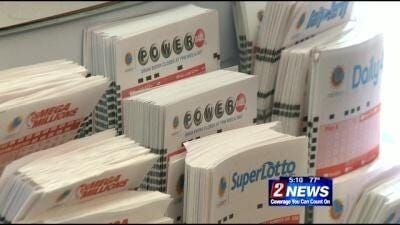

The long lines of people and backed up traffic at Gold Ranch is a sure sign that the lottery is in demand for Nevadans. People travel from miles around, heading to the California border to buy their Powerball tickets, because they cannot buy them in the Silver State. The state constitution does not allow lotteries.
"I always think about it, when we get to one of these Powerballs that gets to be so much," David Bobzien, Reno City Councilman said. "You do sort of wonder how much we're losing out to California."
In 2009, Bobzien was a Democratic Assemblyman in the Nevada Legislature. He was one of the sponsors of an Assembly Joint Resolution, aimed at repealing the ban on lotteries. The measure passed the assembly, 31-11. However, it failed to make it to the Senate floor for a vote.
"The idea was to say 'Hey, let's find out what Nevadans think,'" Bobzien said. "If they want to change the constitution, maybe we should have this option."
The measure was also taken up in 2011 and 2015, but neither even reached a vote. In nearly every recent legislative session, the idea of legalizing the lottery is brought to the table, and doesn't ever gain enough steam to pass. Part of the problem is because some lawmakers say a lottery is direct competition for gaming, one of the Silver State's biggest industries. While some say a lottery would create jobs, they say it would cost even more casino jobs.
"Time and time again, the proponents were able to say that this was not going to be an impact of any significant size on existing gaming activity, that it was supplemental to that activity," Bobzien said.
"I think the gaming lobbyists have been opposed to this for a lot of years," Sen. Don Gustavson, (R) District 14 said. "It's one reason why we don't have it. They put a lot of money into some people's campaigns. So that does help stop that."
Gustavson was also an Assemblyman in the 2009 legislative session. He voted against lifting the lottery ban because he doesn't think the revenue is worth the risk. He says much of that money would be made off the lower class.
"It's usually the poor people, from what I hear in the research, that poor people spend more money on lotteries than the wealthy do, and really hurts the people, puts them more into poverty that don't have any money," Gustavson said.
Some lawmakers say an estimated $80 million of revenue could be generated for education, every year, if the lottery was legalized. Others say the number is less than $50 million. Gustavson says the revenue is not enough.
"Nevada would not get enough money back that would make that big of a difference, I believe," Gustavson said. "Not for the amount of money the legislature puts into education, every time."
Gustavson says Nevada's population is not big enough to make the lottery worthwhile, and that not enough people play the lottery. Bobzien says there has always been a demand, and the lottery would increase funding for education, especially as Nevada's reliance on gaming is reduced.
"People understand that this is a gaming state, that we've always had gaming as part of our history but there are other opportunities out there, and if Nevadans want to buy Powerball tickets, why shouldn't they be able to buy them in Nevada?" Bobzien said.
A joint resolution would have to pass the legislature in two consecutive years, and be approved by voters at the ballot in order to change the constitution. That means the earliest people could buy lottery tickets, in Nevada, would be after the 2020 election.