
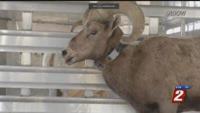


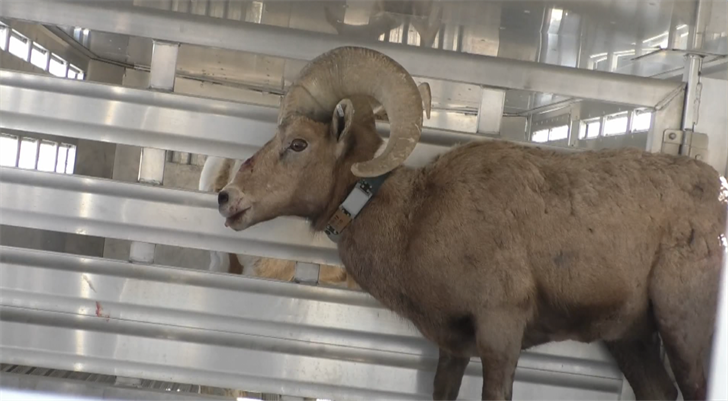
Bighorn sheep are native to the Lake Range on the east side of Pyramid Lake but the species disappeared from the area in the early 1900s. The animal made a historic return, Monday night, thanks to an effort between the Nevada Department of Wildlife (NDOW) and the Pyramid Lake Paiute Tribe.
"We've recovered a species lost in time," Emily Hagler, Biologist for the Pyramid Lake Paiute Tribe said. "It's been a main focus of the tribe for many years, recovering our fisheries and now to be able to recover a large game species is incredibly tremendous."
NDOW captured 21 bighorn sheep from the Sheep Creek Range, northeast of Battle Mountain. Crews started in the early morning, shooting net guns from a helicopter to catch the animals, then lifting them to a nearby location for processing.
"By 8:00, we had four animals being slung underneath the helicopter, being brought in to be given a new home," Mike Cox, Bighorn Sheep Staff Biologist for NDOW said.
Biologists, veterinarians and volunteers examined the sheep before loading them into trailers for their move to western Nevada.
"We have tables where we process the animals, a weigh station, we set up things safety-wise for the helicopter," Cox said.
"They weighed them, they took blood samples, they checked them to make sure if they were pregnant," Hagler said.
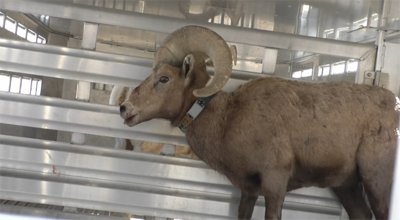
NDOW captured and released four rams and 17 ewes. Tests showed that every adult female is pregnant, so about a dozen of them will give birth to lambs in the spring. Each is fitted with a GPS collar and the ewes have implants to show where they give birth.
"Every two hours, we'll know where they're at and how they're doing and we'll monitor them closely over the next few years and make sure that they're happy and healthy," Hagler said.
Cox says the Lake Range habitat is perfect for the sheep. It offers natural waters, good grass and untapped resources near the top of the mountains.
"I bet you in five years with the productivity, the lamb recruitment, we'll probably see the population exceed 100 animals," Cox said.
"We look forward to their success," Larry Johnson, President of the Coalition for Nevada's Wildlife said. "They're going to make it, they're going to thrive and their going to multiply."
Cox says the reintroduction allows the sheep to thrive in its new location while relieving pressure in its Lander County location, where he says some of the resources are shrinking.
"It's a perfect opportunity to remove some of those and give them a little bit more space and then allow a herd to take off here and grow on their own," Cox said.
NDOW has been focusing on conservation of bighorn sheep for decades. It says Nevada had 2,000-3,000 bighorn sheep in the early 1960s and that today their numbers have risen to more than 12,000.
"These sheep have been here for 10 or 12,000 years and we're just putting back and it's a pretty good honor to be just a part of that," Johnson said.
Unfortunately, there is the possibility of injury during the reintroduction. One of the ewes made the trip to Pyramid Lake but was too weak to run into the mountains. Staff treated the sheep but it did not survive overnight.
"Out of 100 captures, we see maybe two that don't make it," Cox said. "It's tough. I don't want to see one, ever, but we do our best."
Despite the death of one of the animals, the relocation brings renewed hope for a thriving herd on tribal land. They will be a protected species for at least five years, preventing people from hunting them. There are predators like mountain lions that could affect the heard but officials say the operation was very successful.
"The bighorn sheep is a prominent figure inside of all the petroglyphs," Alan Mandell, Vice Chairman of the Pyramid Lake Paiute Tribe said. "So it's something that's been around, a species that's been around and used traditionally and culturally for our people."
"It's very significant for every Pyramid Lake tribal member to have experienced this today. It's something that every Nevadan should be proud of," Hagler said.
Along with bighorn sheep, wildlife conservationists say Nevada's antelope and elk populations are the highest on record and that mountain lions and bears seeing a return to the Nevada wilderness.
Funding for the program comes from various sources including U.S. Fish and Wildlife Service, Nevada Bighorns Unlimited and the Nevada Wildlife Record Book Foundation.
The next phase will happen next year, when NDOW will relocate more bighorn sheep to the same range. They say it will help expand genetics and strengthen the herd.