

The western United States is going through the worst megadrought in 1,200 years, according to a study. Megadroughts are dry periods that last for decades.
"The current megadrought in the western United States has now been going for 22 years and the last time we had a drought this long was in the late 1500s," Jason Smerdon, Climate Scientist at Lamont-Doherty Earth Observatory of Columbia University said.
Smerdon is one of the authors of the study. He says the dry spell is now worse than the one in the 1500s, following a drier than normal year in 2021.
"The addition of that year makes this 22-year period the worst on record," Smerdon said.
The study is based of thousands of trees in more than a dozen western states. Scientists measure the width of the rings in the trees. The thinner rings signify drier years. That indicates lower soil moisture.
"We can look at the most recent 22-year period and we can compare that severity to every other 22-year period going back to 800," Smerdon said.
The region has had both wet and dry years during that period, but overall, the soils are drying out, based on the study.
"Whatever our variability has been in the past, we've had droughts, we've had wet periods. It's going to get drier and drier as a consequence of the continued warming," Smerdon said.
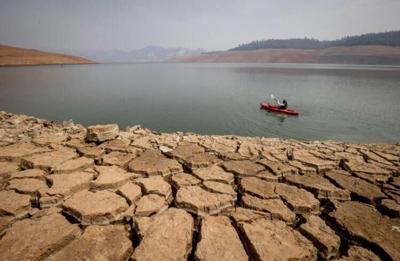
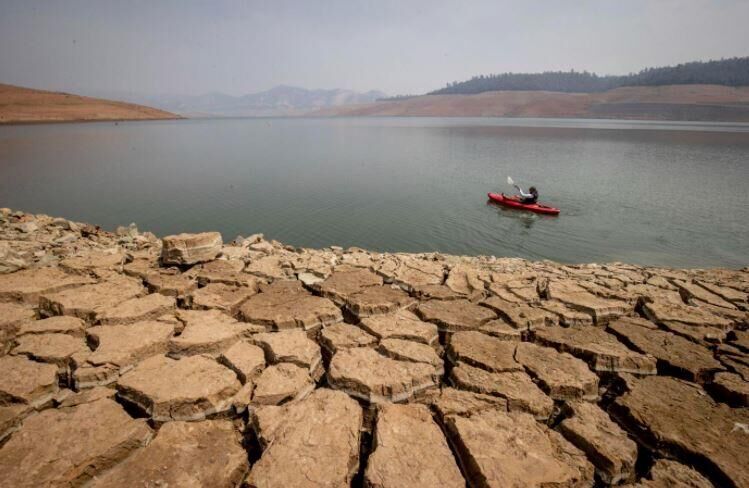
Northern Nevada's lakes and reservoirs dropped because of the poor snowpack in 2021. Southern Nevada has seen a continual drop at Lake Mead. The reservoir is expected to drop 34 feet in the next two years.
"If we look to Lake Mead and Lake Powell, so important for regions of Nevada and other states in the west, those reservoirs are at historically minimal levels," Smerdon said.
The drought is not just based on precipitation. Smerdon says the warmer temperatures are causing the prolonged drought because it dries out the soil, trees and reservoirs.
"As the atmosphere warms, it draws more and more moisture from the land surface," Smerdon said.
He says the megadrought is 42 percent worse because of human-caused global warming, and that it is also causing it to last longer. That's why he says it is important to find new green technologies and clean energy sources.
"If we continue on the path that we're on in terms of the global CO2 emissions that we're dumping into the atmosphere, we expect that these warming trends will also continue," Smerdon said.
The U.S. Drought Monitor shows that most of the western states are in at least some level of drought. In Nevada, that ranges from moderate to exceptional. Smerdon says the megadrought is persisting and conditions are getting drier but that it is also affecting a much larger area than other megadroughts.
"Everywhere out west is getting warmer and everywhere out west where it's getting warmer, we're drawing more and more moisture from the soils as a consequence," Smerdon said.
The dry soils can have a negative impact on snowmelt runoff that goes into rivers and reservoirs. The water affects rangeland and agriculture and recharges groundwater. As soil dries out, it leaves forests more vulnerable to wildfires. According to the National Interagency Fire Center, there were 58,985 wildfires in 2021. They burned 7,125,643 acres.