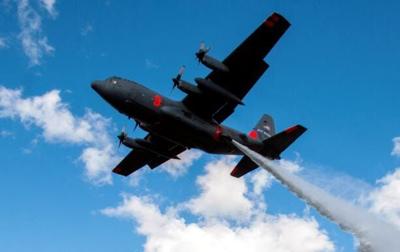
The Reno Nevada Air Guard aircrew is performing firefighting training with C-130 aircraft in Idaho this weekend.
Last year, the 152nd Airlift Wing in Reno, commonly known as the “High Rollers,” was named the newest unit in the four-unit firefighting team, supporting the U.S. Forest Service with C-130 aircraft for large-scale, wildland fire suppression nationwide.
A year into its training and certification, the High Rollers performed mountain maneuvers and water training drops this week in the wilderness outside Boise, Idaho, as part of the mission’s annual training in certification.
In all, more than 400 personnel from four C-130 military units — including Reno and three units from California, Colorado and Wyoming, making up the Air Expeditionary Group — descended here for the week-long training and certification.
“We are extremely excited as we enter our second season training on this incredibly important domestic operations mission,” said Lt. Col. Anthony Machabee, commander of the 152nd Operations Group. “The 152nd Airlift Wing is humbled and honored to work with U.S. Forest Service and our partners with the Wyoming Air National Guard, the California Air National Guard and the Colorado Springs U.S. Air Force Reserves in fighting large-scale wildland fires nationwide. We’re optimistic about what this means for the future of the Nevada Air National Guard.”
The U.S. Forest Service's large MAFFS equipment — rolled into the back of a C-130 aircraft — can drop up to 3,000 gallons of water or fire retardant in six seconds through a nozzle on the rear left side of the plane.
The certification training includes classroom sessions and flight operations for military flight crews, lead plane pilots and other support personnel from the U.S. Forest Service and other wildland firefighting agencies.
"MAFFS have played a critical role in wildfire suppression for more than 40 years by providing surge capacity when commercial air tankers are fully committed or not readily available as they frequently are during periods of high wildfire activity," said Kim Christensen, deputy assistant director for operations for the U.S. Forest Service.