
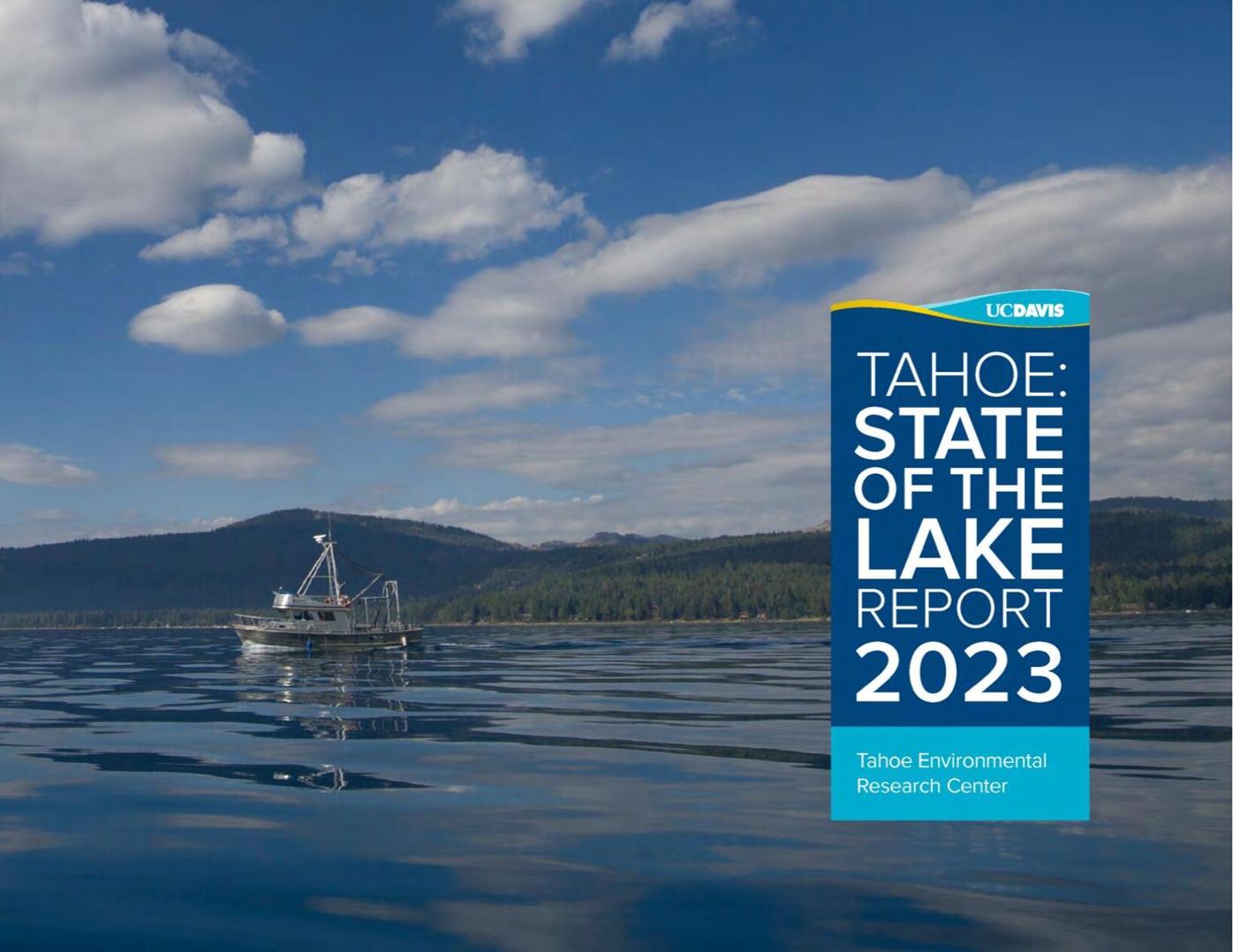
The clarity of Lake Tahoe’s waters in 2023 continued its years-long trend of improving during the winter and deteriorating during the summer.
The annual clarity report, released the University of California, Davis – Tahoe Environmental Research Center, found that winter lake conditions were the clearest observed since 1983 and the 10th best on record, with visibility of 91.8 feet under the surface, compared with 72.2 feet in 2022.
Summer months tell a different story, marking the fifth murkiest on record with an average of 53.5 feet, compared with 68.9 feet in 2022. Overall, the annual average for lake clarity dropped to 68.2 feet from its 2022 value of 71.9 feet.
“It’s important to understand the short-term changes but even more important to be thinking about how this lies in the context of the longer-term trends,” said Alexander Forrest, interim director of the UC Davis Tahoe Environmental Research Center.
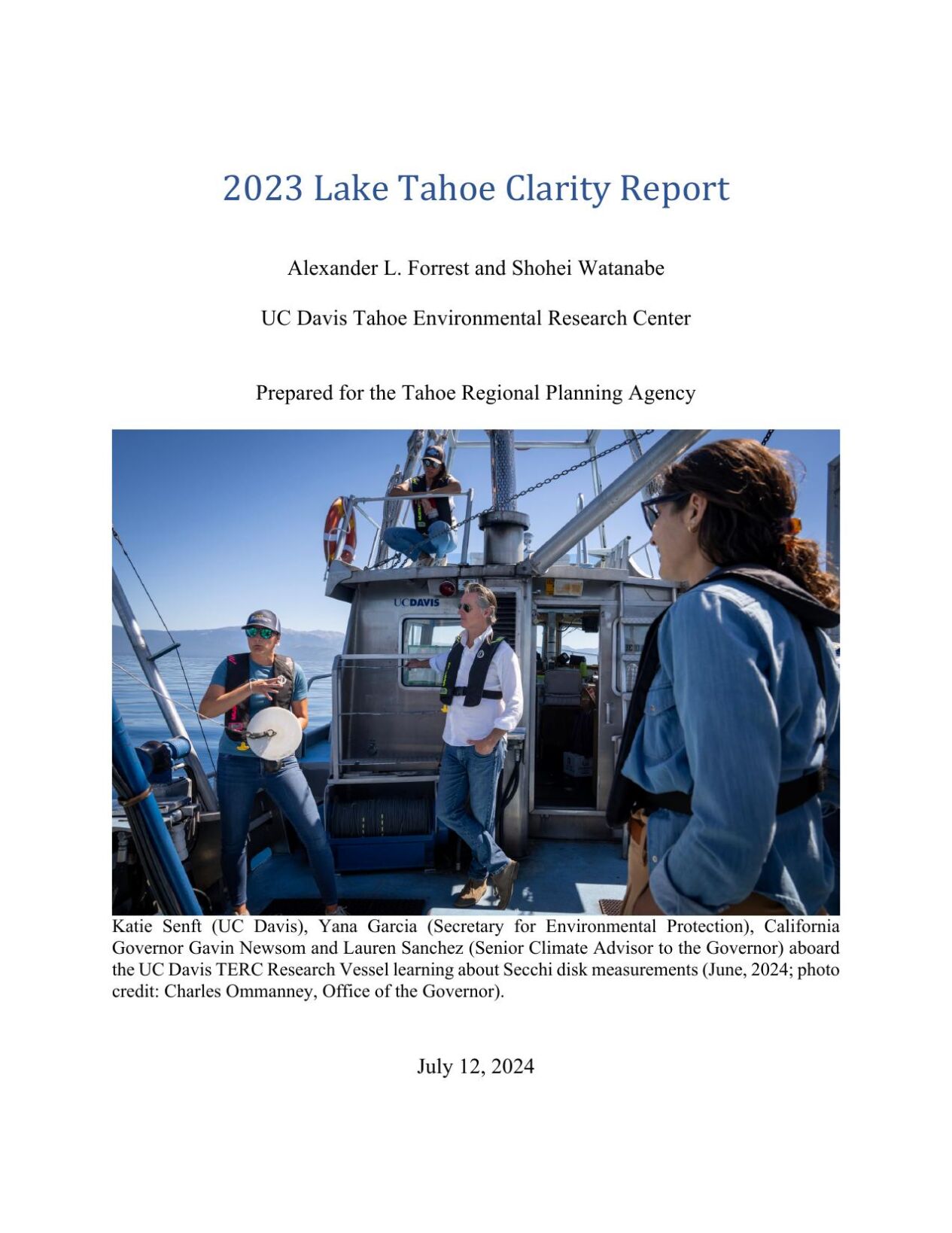
The clarity report attributes 2023’s clearer winter months (December 2022 through March 2023) to deep mixing events that brought clear water to the surface from the bottom of Lake Tahoe. After the clear winter months, the report highlighted the role of runoff and plankton in the observed low summer clarity values.
Runoff from the heaviest winter snowfall in 70 years brought an influx of inorganic particles and a rapid drop in clarity in May. The report said the dominant phytoplankton species, Cyclotella, has decreased since 2017, while another, slightly larger algae, Synedra, is increasing. Changes among the phytoplankton and zooplankton communities within the lake also have the potential to impact clarity.
Phytoplankton are microscopic plants, while zooplankton are microscopic animals that often eat phytoplankton. These planktonic assemblages play critical roles in lake food webs and ecology, and their interplay with lake clarity presents ongoing research questions and opportunities.
(UC Davis)