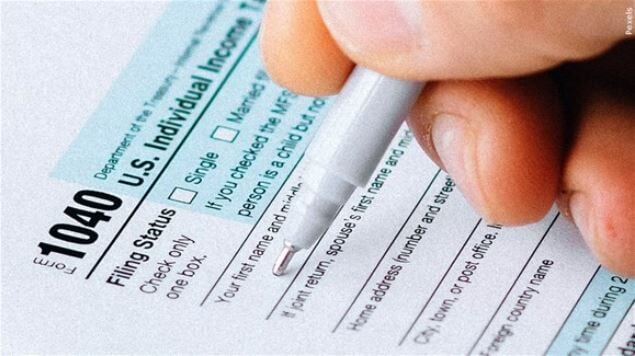


Tax season is here, and so are the scammers, so when you plan on filing your taxes it's important to know what to do and who to trust.
In addition to urging taxpayers, businesses, and tax experts to be on the lookout for frequent scams that jeopardize their financial and tax information, the Internal Revenue Service released its annual Dirty Dozen list of tax scams for 2025.
As people prepare their tax returns during filing season, many of the Dirty Dozen items—which range from deceptive tax credits to email schemes—reach their peak.
As scammers search for methods to steal money, personal information, and data, these scams can happen at any time of the year.
Twelve frauds and scams that pose a hazard to taxpayers are listed in the IRS's annual Dirty Dozen campaign.
In 2002, the IRS launched the Dirty Dozen program to combat new scams that were being discovered all throughout the nation.
The following 12 widespread dangers are highlighted in detail and can be viewed in the 2025 IRS Dirty Dozen list.
According to the IRS, this is the part of the its ongoing efforts to protect taxpayers from ever-evolving scams such as:
- Email phishing Scams
- Phishing
- Smishing
- Bad social media advice
- IRS individual Online Account help from scammers
- Fake Charities
- False Fuel Tax Credit claims
- Credits for Sick Leave and Family Leave
- Bogus self-employment tax credit
- Improper household employment taxes
- The overstate withholding scam
- Misleading Offers in Compromise
- Ghost tax return preparers
- New client scams and spear phishing
The IRS says the Dirty Dozen list is meant to warn taxpayers and the tax professional community about different scams and schemes, but it is not a formal listing of agency enforcement priorities nor a legal document.
Additionally, the IRS advises taxpayers that there are several other abusive scams and fraudulent tax avoidance tactics that can deceive well-meaning people in addition to the Dirty Dozen.
These may include various trust forms, offshore plans, or even personal retirement plans.
The IRS also urges taxpayers to report tax return preparers who intentionally prepare wrong returns and those who promote abusive and improper tax methods as part of the Dirty Dozen awareness campaign.
People can use the online form 14242, Report Suspected Abusive Tax Promotions or Preparers, to report abusive tax scams or tax return preparers.
People can also mail or fax a completed Form 14242 together with any supporting documentation to the IRS Lead Development Center in the Office of Promoter Investigations.
Mail:
Lead Development Center, Internal Revenue Service MS7900, 1973 N. Rulon White Blvd., Odden, UT 84404
Fax: 877-477-9135
For a potential financial reward, taxpayers and tax professionals may also submit the information to the IRS Whistleblower Office.