

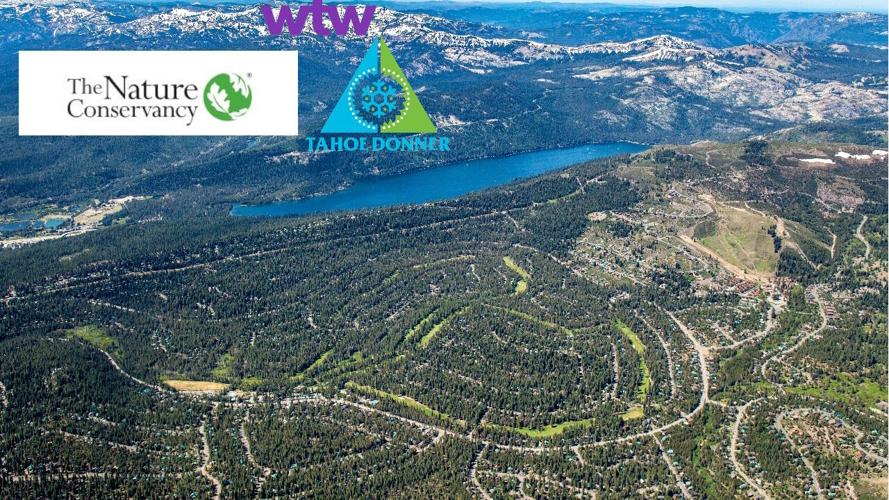
The Nature Conservancy (TNC) and Willis, a business of WTW (NASDAQ:WTW), have announced a groundbreaking $2.5 million wildfire resilience insurance policy—the first of its kind to factor in wildfire mitigation efforts.
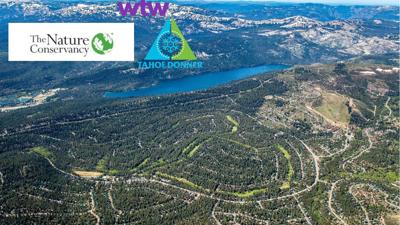
Structured by Willis, the policy was developed for the Tahoe Donner Association, a private homeowners association in Truckee, California.
Created in collaboration with the Center for Law, Energy, and the Environment (CLEE) at the University of California, Berkeley, the policy aims to demonstrate how forest management practices can lead to both lower premium pricing and greater insurance availability.
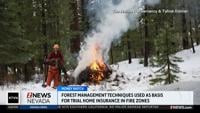
Techniques like tree thinning and prescribed fire, which help reduce wildfire risk and improve forest health, were key to this model.
Tahoe Donner was chosen because of its long-standing Forest Health Management Program, which began in 1992.
Originally designed to foster forest health, the program has since expanded to address wildfire and climate risks more broadly.
Until now, insurance policies have not reflected the risk reduction benefits of forest fire mitigation.
This new policy covers 1,345 acres of Tahoe Donner’s forested and recreational land and includes a 39% lower premium and 89% lower deductible than if nature-based practices had not been used.
The Nature Conservancy says this shift is critical as more insurers decline to write or renew policies in California and other wildfire-prone states due to increasing risk and claims costs.
David Williams, Associate Director, Alternative Risk Transfer Solutions, Willis, said:
“The forest management work completed by Tahoe Donner, by removing fuel that could burn and leading to a lower fire risk, has considerably reduced the premium and deductible in this insurance policy." He added, "At a pivotal moment for California’s insurance market, Willis has worked across the industry to bring this solution to Tahoe Donner, placing the insurance with Globe Underwriting, in a positive step towards a more resilient and sustainable insurance industry.”
Globe Underwriting (formerly Forest Re), which is internationally recognized for its expertise in forestry risk assessment, provided the essential empirical analysis that enabled the premium and deductible reductions.
Kristen Wilson, lead forest scientist at The Nature Conservancy in California, said:
“By placing this innovative insurance product, we hope to inspire other insurance underwriters to account for the benefit of thinning and prescribed fire and increase the implementation of this type of work more broadly.”
Dave Jones, Director of the Climate Risk Initiative at CLEE, UC Berkeley School of Law, and former California Insurance Commissioner, stated:
“Federal, state, and local governments, homeowners, homeowners’ associations, and businesses are doing the right thing to reduce wildfire risk and invest in nature-based forest management. The improved price and availability of this pioneering insurance policy demonstrate that home and business insurers can and should renew and write property insurance in California and elsewhere in the United States where forest treatment is undertaken.”
Annie Rosenfeld, Tahoe Donner General Manager, shared:
“Tahoe Donner has been tested with fires that have come to the borders of the community, and the forestry work did its job. It slowed the spread of the fire to give firefighters enough time to stop it from impacting our community. We are proud to be a leader in this field.”
This announcement comes amid an increasingly unstable insurance market in California and beyond. Thousands in areas like Pacific Palisades recently lost coverage just before major fires, and over the last five years, hundreds of thousands of California homeowners have had their policies non-renewed due to wildfire risk.
The state’s FAIR Plan—meant for those unable to get private insurance—has seen policy demand surge: residential policies increased by 123% and commercial policies by 161% between September 2020 and September 2024.
This new policy marks a critical step in recognizing ecological fire mitigation as a valid factor in insurance pricing and availability—offering a promising path forward for wildfire resilience.