





A stretch of busy Reno freeways will see overnight lane reductions this week, as routine inspections and future roadwork preparations get underway.
I-80 and I-580 Lane Reductions Central Reno
In Reno, the Nevada Department of Transportation said drivers should expect lane reductions and ramp closures on Interstate I-580 and I-80 beginning Monday night.
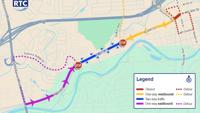
From 9 p.m. to 5:30 a.m. Monday, the Reno-Tahoe Airport on-ramp to northbound I-580 will be closed, with a detour available. The eastbound I-80 ramp to northbound U.S. 395 will also be closed, with a detour in place.
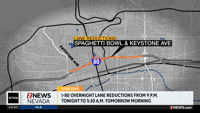
Additional impacts continue Tuesday night from 9 p.m. to 5:30 a.m., when both directions of I-80 will be reduced to at least one lane between the Spaghetti Bowl and Keystone Avenue in downtown Reno. Interstate ramps will remain open, but speed limits will be reduced through the work zone.
Drivers should expect moderate delays and allow extra travel time.
The work is part of routine bridge inspections, including structures along I-580 near Reno-Tahoe International Airport and several bridges along I-80 in downtown Reno. Transportation officials inspect most bridges across the state every two years, with some inspected more or less frequently depending on condition and age.
I-80 Lane Reductions Between Sparks and USA Parkway
Separately, beginning May 6, additional overnight lane reductions will affect I-80 east of Sparks as crews begin early work tied to a future widening project.
Through July, drivers can expect intermittent single-lane closures and shoulder closures in both directions between Vista Boulevard and USA Parkway from 8 p.m. to 5 a.m. nightly.
The work includes survey activity, subsurface utility location, and geotechnical engineering ahead of final design plans.
Transportation officials say the long-term project, expected to begin as early as 2027, will widen I-80, replace some bridges, expand shoulders, and improve interchanges to address increasing traffic.
About 50,000 cars travel that stretch daily, with traffic rising more than 70 percent over the past decade. Over a recent five-year period, an average of 144 crashes occurred each year along that corridor. Planned improvements are expected to reduce overall crash rates by about 20 percent compared to leaving the road unchanged.
Schedules are subject to change.