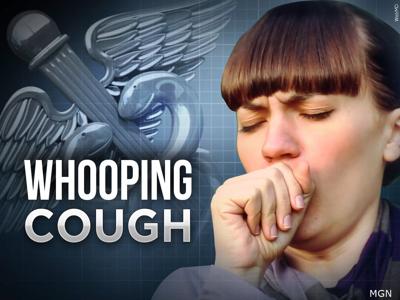

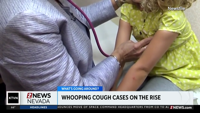

Northern Nevada is seeing a rise in whooping cough cases, also known as pertussis, according to local health officials.
Dr. Chad Kingsley, district health officer for Northern Nevada Public Health, said, “We are seeing an increase in whooping cough, which is called pertussis. There is a vaccine, called Tdap, that covers tetanus, diphtheria, and pertussis, which is whooping cough. Last year, we had five confirmed cases. This year, we already have 18, so we are seeing a significant increase.”
He added, “It is often diagnosed later. If you have a persistent cough that is respiratory, your doctor should check to see if you are testing positive for whooping cough. It is sometimes called the ‘hundred-day cough’ because it can last that long. We are seeing a rise in our community compared to last year.”
Symptoms of whooping cough typically appear 7-10 days after exposure and progress in three stages:
* Stage 1 (Catarrhal): Mild cough, runny nose, low-grade fever.
* Stage 2 (Paroxysmal): Severe coughing fits, often with a “whooping” sound, vomiting, and exhaustion.
* Stage 3 (Convalescent): Gradual recovery, although coughing may persist for weeks
Health officials are urging residents to stay current with pertussis vaccinations. The Tdap vaccine is recommended for adolescents and adults to prevent infection and reduce the risk of spreading the disease, particularly to infants and young children who are most vulnerable.
Northern Nevada Public Health provides Tdap vaccines for different age groups: children 7 through 10 who are not fully vaccinated, children 11 through 18 who have completed the DTP/DTaP series, and adults 19 and older who are due for a Td booster. Vaccinations are provided by appointment, and follow-up boosters are recommended every 10 years for adults.
Residents with questions about the vaccine should contact their healthcare provider or Northern Nevada Public Health to schedule an appointment.
(Northern Nevada Public Health contributed to this report.)