







ADEN, Yemen (AP) — Forces of the Saudi-led coalition fighting in Yemen have recaptured several key areas around the strategic Bab el-Mandeb Strait from Iran-backed Houthi rebels, Yemeni officials said Monday, while the Houthis claimed attacks on Saudi oil facilities, airports and military bases as fighting escalated on Yemen’s western coast.
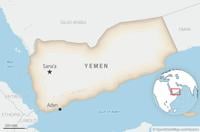
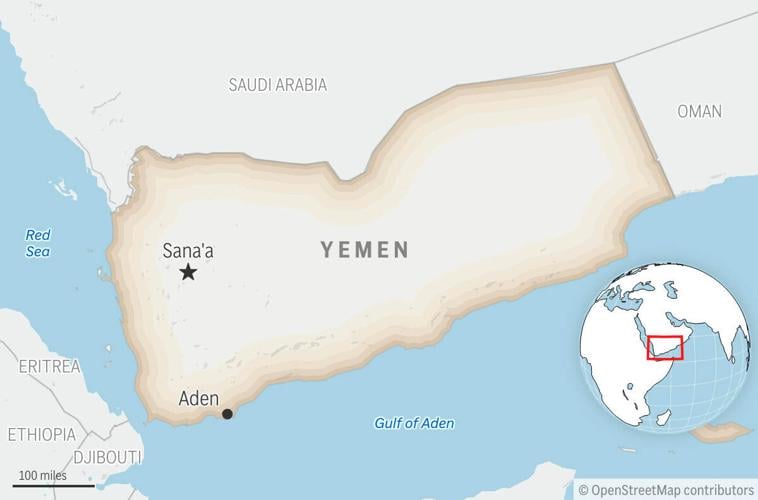
The Yemeni officials said forces allied with the internationally recognized government retook the crucial town of Dhubab just north of the strait, a vital shipping route that connects the Red Sea with the Gulf of Aden.
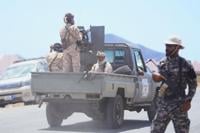
They also captured the towns of Bab and Hadeid, said the officials, who spoke on condition of anonymity because they were not authorized to speak to reporters. Witnesses said they saw government tanks and forces entering the towns.
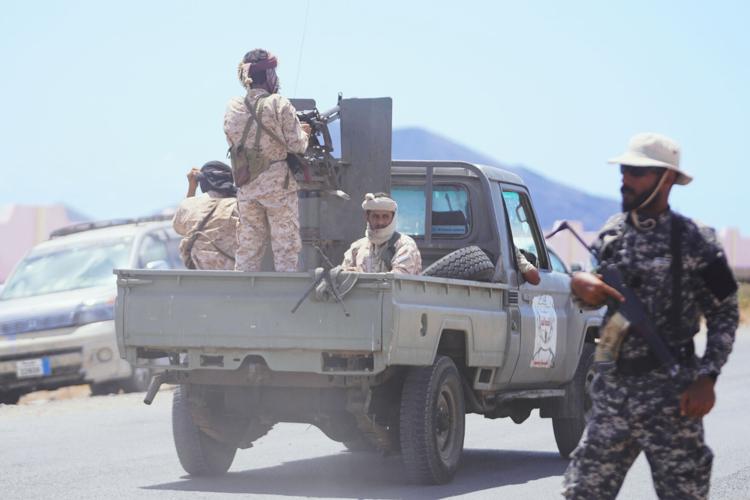
The government push came as part of a major offensive launched early Monday under air cover by a Saudi military coalition.
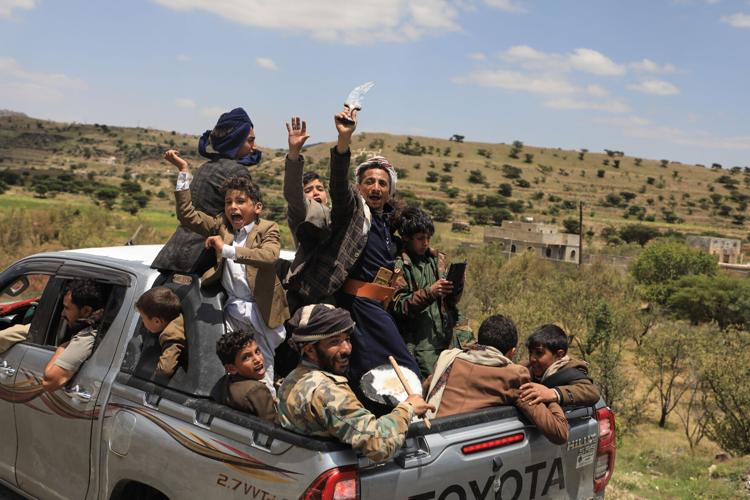
Brig. Gen. Yahya Saree, the Houthis' military spokesman, claimed in a pre-recorded statement that the rebels used ballistic and cruise missiles and drones in attacks targeting King Khalid International Airport in the Saudi capital, Riyadh, and an oil refinery in the Red Sea city of Rabigh.
Also attacked were Abha airport, military facilities in Khamis Mushait and other “critical sites” in the cities of Najran and Jizan, he claimed.
U.S. Secretary of State Marco Rubio told reporters that it was expected that the Saudi-backed government would hit back at the rebels to reclaim territory. Asked if the coalition coordinated the action with the United States, Rubio said that Saudi Arabia and the U.S. have a defense agreement but wouldn’t offer more details.
Since the Yemeni government was ousted from some of its territory by the Houthis and the Saudis have come under attack, “they have a right to defend themselves,” Rubio said.
U.S. Embassy in Riyadh warns of possible attacks
The U.S. has provided support to Saudi Arabia in its ongoing campaign against the Houthis, according to a regional official and a U.S. official who spoke on condition of anonymity because they weren’t authorized to speak to reporters. The support included intelligence sharing, target identification and planning for the offensive, said the officials.
The U.S. had supported the Saudi-led coalition fighting the Houthis early in the Yemen war, before quitting the coalition in recent years.
The U.S. Embassy in Riyadh warned U.S. citizens on social media to be vigilant about possible drone or missile attacks.
The offensive came just after the rebels said they had captured more territory in the southwestern part of Yemen, taking a key town in a blow to the Saudi-backed forces as they advanced toward a strategic provincial capital in the region.
The Saudi-led coalition spokesman, Maj. Gen. Turki al-Malki, said 100 fighter jets were providing support to government forces. He said the coalition secured “air protection” of the Bab el-Mandeb Strait and destroyed hundreds of Houthi targets.
Pakistan and Turkey say they will deploy forces to Saudi Arabia
Also on Monday, the foreign and defense ministers of Pakistan and Turkey agreed with Saudi Arabia to deploy military forces to the kingdom under their defense pact.
A joint statement released by Pakistan’s Foreign Ministry after an emergency meeting in Riyadh did not specify troop numbers, identify which countries would contribute forces or give a deployment timetable.
The three countries condemned what they described as attempted attacks on Mecca and Medina, as well as continuing attacks on Saudi cities and civilian and economic facilities. The statement did not identify who was responsible.
The air campaign follows the fall of a key town in Yemen
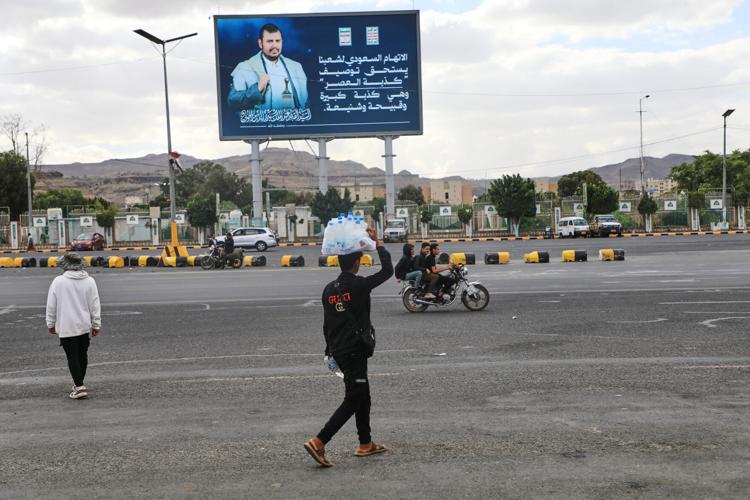
The escalation between Saudi Arabia and the Houthis has revived Yemen’s civil war after a four-year ceasefire.
Houthis seized the town of Turbah on Sunday. Turbah sits on a main road linking the provincial capital of Taiz with the port city of Aden, which serves as an interim seat of Yemen's government. Over the years, the town was a major post for government forces defending Taiz.
Earlier, the Houthis seized several villages and areas on Taiz's outskirts, paving the way for the rebels to encircle Taiz, Yemen’s third-largest city.
Yemen’s flare-up shows the capabilities of the Iran-backed rebels
The Houthis made a swift push on the country's western coast on the Red Sea in early September. They captured the strategic city of Mokha and several Red Sea islands, gains that enabled them to control the Yemeni side of the Bab el-Mandeb Strait, through which 12% of global trade transits.
The Saudi-backed government said Sunday it was mobilizing troops across government-held areas.
Rashad al-Alimi, head of the ruling Presidential Leadership Council, said in a televised speech that the operations were aiming at “recovering the remaining territories” controlled by the Houthis. He called on the international community to provide support to his government.
Hours after al-Alimi’s declaration, the Saudi military spokesperson al-Malki vowed “full operational support” to Yemeni government forces until the Houthis are “eliminated.”
Saudi-backed government forces are trying to fight back
Al-Alimi said in a post on X on Monday that the operation — dubbed “Yemen Dawn” — had started with the aim of “restoring state institutions, liberating” Sanaa, Yemen’s rebel-controlled capital, and ending “the Houthi terrorist militia coup.”
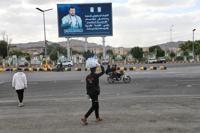
Al-Nazili said government forces were carrying out a “strategic offensive” on Sanaa. The Houthi media office reported multiple airstrikes on their territories, including Sanaa.
The rebels' taking of Turbah will likely constrain government forces’ ability to reinforce and resupply front-line positions across Taiz province and the provincial capital of Taiz, according to the Institute for the Study of War, a Washington-based think tank.
The escalation has revived Yemen's 12-year civil war
Yemen’s civil war began in 2014 when the Houthis descended from their northern stronghold, capturing Sanaa and forcing the government to flee into exile in Saudi Arabia. The war created one of the world’s worst humanitarian disasters and killed more than 150,000 people.
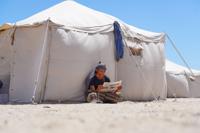
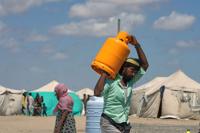
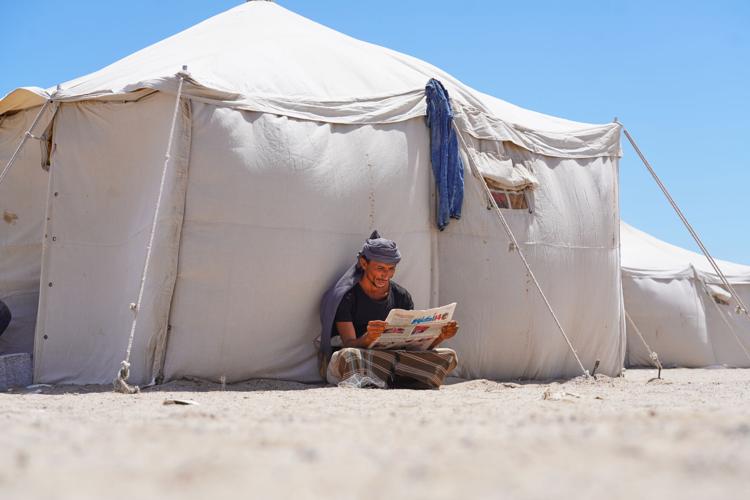
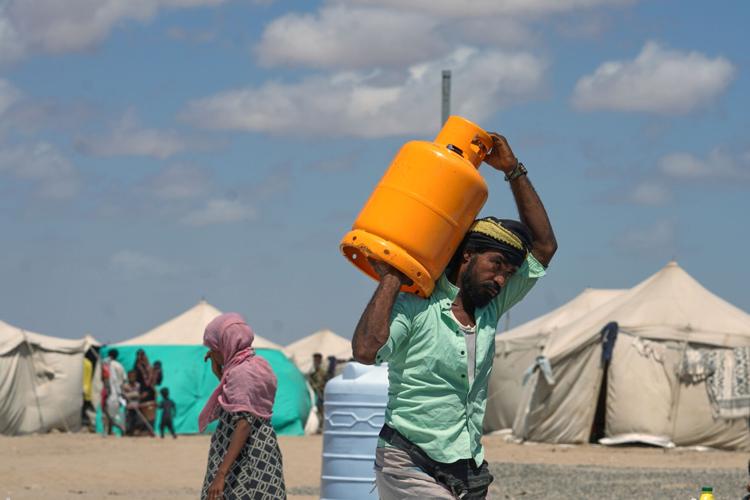
The latest bout of violence has killed at least 959 people and wounded over 4,200 others, according to the World Health Organization. The flare-up forced about 174,097 people to flee their homes inside Yemen, according to the U.N. migration agency. More than 3,000 others fled across the waters into Djibouti, the agency reported.
Last week, Yemen’s health ministry — part of the internationally recognized government — warned about the conflict’s impact on health facilities and medical staff across Taiz province. The ministry said in a statement on Friday that health facilities in coastal, western and southern areas of the province have closed or are barely partially functioning.
Magdy reported from Cairo. Associated Press writer Matthew Lee contributed to this report.