
















Iran intensified its attacks on oil and gas facilities around the Gulf on Thursday in retaliation for an Israeli attack on a key Iranian gas field, dramatically raising the stakes in a war that is sending shock waves through the global economy.
President Donald Trump warned that the U.S. would “ massively blow up the entirety ” of Iran’s gas field if it continues attacking its neighbors. And Israeli Prime Minister Benjamin Netanyahu declared later Thursday that Iran no longer can enrich uranium or make ballistic missiles. As he spoke, Israel's military sent another alert about incoming Iranian missiles, and sirens sounded from Haifa to the Sea of Galilee.
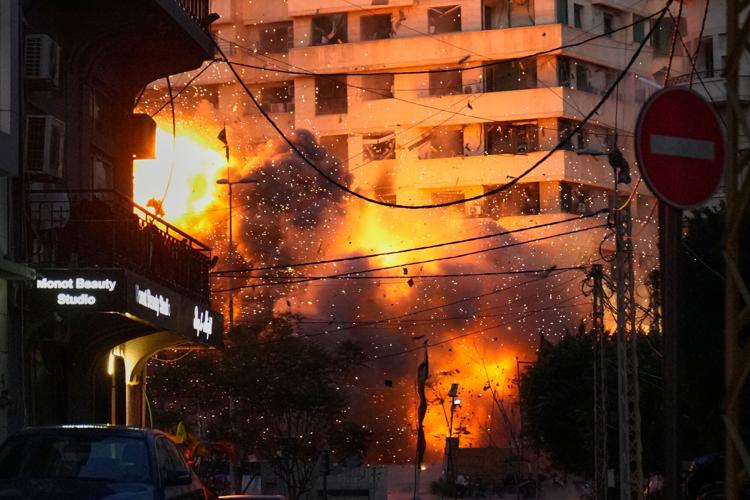
The price of Brent crude oil, the international standard, spiked more than 60% since Israel and the United States started the war with Iran. Meanwhile, the death toll from Israeli strikes in Lebanon topped 1,000 people on Thursday amid renewed fighting with the militant group Hezbollah.
Here is the latest:
Trump and Netanyahu split on gas field attack, raise questions about whether they’re in sync on war
President Donald Trump and Israeli Prime Minister Benjamin Netanyahu ’s diverging language on Israel’s decision to attack a critical Iranian gas field marks the most notable difference of opinion between the two leaders since the start of the 20-day war against Iran.
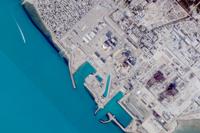
The attack by Israel on the South Pars gas field prompted Iran to retaliate against energy infrastructure in other Middle East countries. The Iranian strikes led to already elevated global energy prices further surging and spurred Gulf allies to call for Trump to rein in Netanyahu.
The aftermath of the strike left Trump and Netanyahu facing questions on whether they’re entirely in sync in prosecuting the war that began as a closely coordinated joint attack on the longtime regional foe. The emergence of daylight — or at least the appearance of it — between the two leaders could shape the balance of the conflict and any eventual endgame.
▶ Read more about Trump, Netanyahu and the war
Israel’s emergency service reports no casualties from latest missile launches from Iran
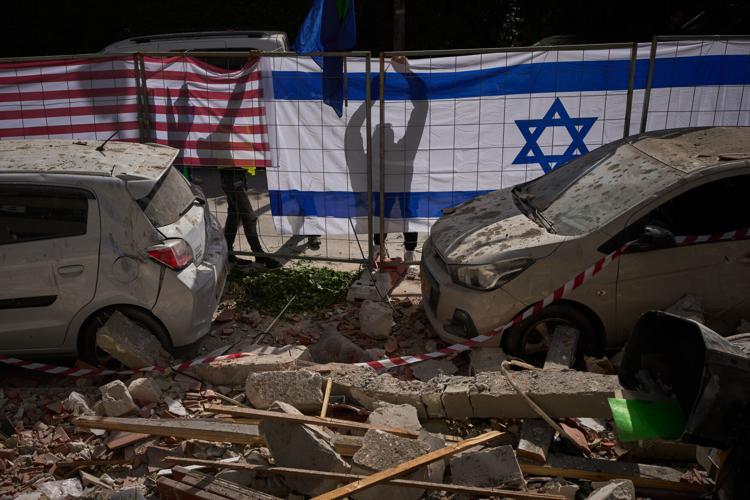
But a person critically injured earlier in the day in an attack in the area of Kiryat Shmona was medically evacuated, the Magen David Adom emergency medical service said.
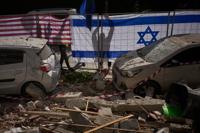
A direct hit damaged a building in the northern Israeli city, which is near Lebanon. It has been targeted repeatedly by both Iran and Hezbollah.
EU leaders call for free navigation in the Strait of Hormuz, safety for energy and water sites
Leaders of the bloc’s 27 nations called for a moratorium on strikes on energy and water infrastructure in the Middle East and for the reopening of the Strait of Hormuz during a summit in Brussels.
They also asked for Iran to stop striking neighbors across the Persian Gulf, sought international cooperation to prevent any large-scale refugee crisis in the Middle East and said some EU nations are exploring ways “to ensure freedom of navigation in the Strait of Hormuz.”
European leaders have deflected entreaties from U.S. President Donald Trump to join the fight, but they have also fiercely criticized the Iranian government.
UN Security Council holds urgent closed meeting on energy attacks in Iran war
Bahrain’s U.N. Ambassador Jamal Alrowaiei, the Arab representative on the U.N.’s most powerful body, said his country requested the meeting because of the continuing “cowardly attacks by Iran” on Gulf countries, Jordan and other nations.
He said afterward that Bahrain and many of the 15 council members stressed a need for Iran to implement a March 11 resolution demanding an immediate halt to attacks against Gulf countries and the targeting of civilians and civilian infrastructure including energy installations.
He said the resolution, adopted by a vote of 13-0 with Russia and China abstaining, also calls for Iran to stop all actions and threats aimed at closing, obstructing or interfering with navigation through the Strait of Hormuz, a key waterway for shipment of 20% of the world’s oil.
Alrowaiei dodged a question about reports that Bahrain is seeking a resolution on freedom of navigation, including through the strait.
Qatar Energy says damage from Iranian missile attack can take up to 5 years to fix
Qatar, a key source of natural gas for world markets, gave more details late Thursday of the extensive damage caused by missiles hitting the Ras Laffan liquefied natural gas facility.
Qatar Energy said on the social platform X that the attacks reduced LNG exports by about 17% and will cost about $20 billion per year in lost revenue.
The damage will take up to five years to repair, even though production at the facility had already been halted after earlier attacks.
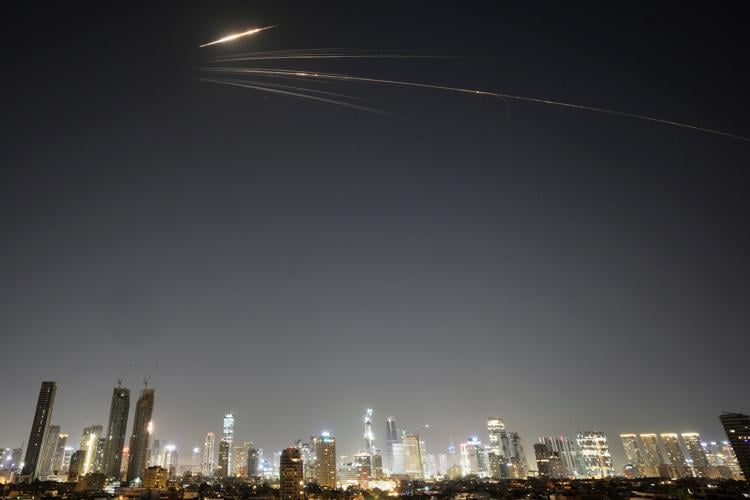
Israel’s military says Iran launched another missile attack just before midnight
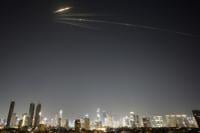
Sirens sounded in a large swath of central Israel, from the Mediterranean Sea to the Dead Sea. Loud explosions were heard in Jerusalem.
It was the 13th such alert in a day, making it one of the most active for missile launches from Iran toward Israel in the war.
The targeting of key Gulf energy infrastructure raises the risk of long-term disruption
Escalating attacks on key oil and gas facilities in the Persian Gulf have increased the risk of an extended bout of higher prices for everything from gasoline and electricity to computer chips and food.
Even if the Strait of Hormuz becomes safe for tankers to transit soon, it will be some time before oil and gas begin flowing again due to the complexity of restarting refineries and other facilities. If energy infrastructure has been damaged by the ongoing attacks, it will take even longer.
It’s not just oil and gas: Key raw materials — like helium used in making computer chips and sulfur, a raw material in fertilizer — have been obstructed and could soon be in short supply, raising prices of goods all the way along the supply chain.
▶ Read more about the targeted refineries, terminals and other infrastructure
France will double humanitarian aid for Lebanon to 17 million euros
During a visit to Beirut, French Foreign Minister Jean-Noël Barrot said on X that his country would increase its humanitarian aid to Lebanon to nearly $20 million.
Israeli strikes against the Iranian-backed Hezbollah militant group in Lebanon have displaced more than 1 million people — roughly 20% of the population — and killed more than 1,000 people, according to the Lebanese government. Many families are sleeping in cars, on the streets or in overcrowded schools turned into shelters.
Attempts by Lebanese officials to enter into direct negotiations with Israel to halt the fighting have been unsuccessful. Neither Hezbollah nor Israel appears to have any immediate desire to stop the war.
Energy expert says lifting Iranian oil sanctions would benefit Iran
And lifting those sanctions wouldn’t benefit many other players, said Daniel Sternoff, senior fellow at the Columbia Center on Global Energy Policy.
Earlier Thursday, U.S. Treasury Secretary Scott Bessent said the U.S. may un-sanction about 140 million barrels of Iranian oil that’s already currently at sea.
Normally, the only buyers of Iranian oil are private refiners in China, who purchase it at a steep discount, Sternoff said.
“You’re going to have others who are now not able to get other Middle Eastern grades scramble to buy them,” Sternoff said. “It will reduce the Iranian discount, or raise the prices of Iranian crude, to the benefit of Iran.”
That the U.S. is considering lifting sanctions on Iranian oil shows how serious the supply situation has become, said Kevin Book, managing director at Clearview Energy Partners.
Brent crude briefly tops $119 per barrel before receding, shaking markets worldwide
A roller-coaster day for oil prices has showed how they’re dictating where financial markets and maybe even the global economy are heading. Stocks tumbled in Europe and Asia when oil prices shot higher early Thursday, but U.S. stocks pared sharp losses as the day progressed and oil prices fell back.
The price jump followed intensified attacks by Iran on Gulf oil and gas facilities in response to an Israeli attack on an important Iranian natural gas field. That worsened fears of a long-term knockout for oil and gas production in the Middle East, which could lock in high prices and push inflation higher around the world.
Trump and countries around the world have made moves to stem the impact on consumers, but they’re mostly short-term fixes.
The S&P 500, Dow Jones Industrial Average and the Nasdaq composite finished Thursday’s trading with minor dips, recovering from early losses.
Israel’s military says it’s working to intercept a missile launch from Iran
The late-evening attack was the 12th salvo Iran fired at Israel on Thursday, making this one of most active days for launches since the war started.
Sirens sounded in Jerusalem and nearby areas, including in the occupied West Bank.
FIFA wants Iran to keep its US World Cup schedule and won’t act on Palestinian complaint about Israel
FIFA president Gianni Infantino said after the body’s ruling council met Thursday that it will not grant Iranian requests to move the team’s three World Cup group games in June from the United States to Mexico.
“We have a schedule,” Infantino said. “We want the FIFA World Cup to go ahead as scheduled.”
Iranian officials say they don’t want to boycott the World Cup, but insist it’s not possible for the national team to play in the United States after America and Israel launched a war on their country.
Soccer’s governing body meanwhile took no action on its Palestinian member federation’s complaints that Israel violates FIFA statutes by letting teams from Israeli settlements in the occupied West Bank play in its national league. FIFA did, however, fine the Israel Football Association 150,000 Swiss francs ($190,000) on disciplinary charges relating to “discrimination and racist abuse,” plus “offensive behavior and violations of the principles of fair play.”
State Department cut staff with deep expertise in Middle East
The widening war in Iran is exposing big gaps at the State Department, especially in the bureau that handles the Middle East.
Former officials say Trump administration staff cuts have left key leadership jobs vacant, so the bureau now relies on a small circle of aides along with task forces and volunteers.
The former officials describe an understaffed and demoralized workforce in turmoil, which they link to mixed public messaging, weak planning and trouble helping Americans trapped in conflict zones.
The State Department is vigorously disputing this Associated Press report.
Netanyahu says he didn’t deceive Trump about war with Iran
“I misled no one,” Israel’s prime minister said in a news conference Thursday.
“And I didn’t have to convince President Trump about the need to prevent Iran from developing its nuclear program,” he continued, “putting it underground and being able to launch nuclear-tipped missiles at the United States. He understood that.”
Regarding the war’s toll on U.S. troops, he sent his condolences on behalf of Israel, saying, “The cost to bereaved families is enormous.”
Netanyahu also waved off rising fuel prices as a “spike” that will come down and said he expects the U.S. will reopen the Strait of Hormuz.
Netanyahu says Israel will hold off on any further attacks on Iran’s giant natural gas field at Trump’s request
In a televised address, Netanyahu also said that “Iran’s air defenses have been rendered useless, their navy is lying at the bottom of the sea ... their air force is nearly destroyed.”
The Israeli leader said he hopes the Iranian people will rise up against the Islamic Republic that has ruled for nearly half a century, but he conceded “it’s too early” to say whether that will happen. There’s been no sign of such an uprising since the war began in Iran, where authorities crushed mass protests in January.
Iraqi security tracks dozens of attacks on US facility next to Baghdad airport
A former U.S. base adjacent to Baghdad’s airport that still provides logistical support to American operations has been attacked at least 65 times since the beginning of the war, according to an Iraqi security report obtained by The Associated Press.
The vast majority of the attacks between March 2 and 18 involved drones — sometimes several fired at once — a total of 73. The report said between 17 and 22 shells and missiles were fired at the facility. Iran-backed Iraqi militias have claimed some of the attacks.
Most of the launches have been intercepted, but on Wednesday, a rocket attack wounded four airport security personnel and staff. Multiple attacks have also targeted the U.S. Embassy in Baghdad and the U.S. consulate in the northern city of Irbil.
A U.S. official, who spoke on condition of anonymity because they were not authorized to comment publicly, said the Iraqi report figure is “in the ballpark” of what the U.S. has been tracking in terms of rocket, drone or other attack attempts on the airport.
— Qassim Abdul-Zahra and Matthew Lee
Netanyahu denies that Israel pressured the United States into going to war
The Israeli leader dedicated a substantial chunk of his news conference to denying that his government pushed the United States into war.
“This canard that we dragged the United States into this is not just a canard, it’s ridiculous,” he said, reciting a checklist of Iranian attacks and threats against America over the decades. He said Trump had told him more than a year ago: “Bibi, we’ve got to make sure that Iran doesn’t have nuclear weapons.”
“The world owes a debt of deep indebtedness, deep indebtedness to President Trump for leading this effort to safeguard our future,” he said.
Netanyahu says Iran no longer can enrich uranium or make ballistic missiles
Since the U.S. and Israel launched the war on Feb. 28, Iran’s top leaders have been killed in airstrikes and the country’s military capabilities have been severely degraded. Israeli Prime Minister Benjamin Netanyahu said late Thursday that Iran no longer has the ability to enrich uranium or make ballistic missiles.
Still, Iran — now led by the son of the supreme leader killed in the war’s opening salvo — remains capable of missile and drone attacks rattling its Gulf Arab neighbors and a global economy dependent on the energy they produce.
Israel says Hezbollah has fired roughly 700 rockets, missiles and drones
Israeli military spokesman Lt. Col. Nadav Shoshani accused Lebanon’s government of failing to clear the militant group from the country’s south as required by a 2024 ceasefire.
Hezbollah began firing toward Israel in the opening days of the current war, renewing fighting that had been muffled since the ceasefire. Shoshani said Israel had “no choice but to operate against the threat Hezbollah poses to our civilians.”
The Iran-backed group’s strikes have not caused any fatalities but have wounded Israelis and damaged buildings in the country’s north. Israel has responded with airstrikes and expanded its ground operations in southern Lebanon, displacing more than 1 million people and killing more than 1,300, according to Lebanese authorities.
Will Trump deploy US troops to seize Iran’s uranium?
The U.S. president is facing perhaps the most daunting question of the war with Iran, one that could define his time in office: Will he send U.S. troops to secure some 970 pounds of enriched uranium that Tehran could potentially use to build nuclear weapons?
Trump has offered shifting reasons for joining Israel in launching the war, but he’s consistently said Iran must “never have a nuclear weapon.”
Much of Iran’s near-bomb-grade nuclear material is believed to be buried under the rubble of a mountain facility pummeled in U.S. bombings Trump ordered last June.
Seizing or destroying it would be risky and complicated, and many nuclear experts say it can’t be done without a sizable, dangerous and politically fraught troop deployment by the Republican leader who has vowed not to entangle the U.S. in another extended and bloody Middle East conflict.
Iran war puts risks of Trump’s oil focus on display
When Trump returned to office last year, he launched a crusade in pursuit of what he calls American energy dominance.
Now, as crude oil prices rise above $100 a barrel and gasoline prices surge toward $4 a gallon, experts say Trump’s strategy of blocking clean energy such as wind and solar power has made the U.S. more vulnerable to supply shocks caused by the war. The Strait of Hormuz, a key access point for the global oil market, is effectively blocked.
Trump said Thursday he knew oil prices would go up and “the economy will go down a little bit” as a result of the war.
“I thought it would be worse — much worse, actually,’′ he said.
F-35 jet is forced to make an emergency landing, US military says
One of America’s most advanced fighter jets made an emergency landing after flying a combat mission over Iran, U.S. Central Command says.
The jet landed safely and the pilot was in “stable” condition, said Capt. Tim Hawkins, a spokesman for the command that oversees the Middle East.
CNN first reported on the incident and said the jet was believed to be hit by Iranian fire. Iran’s state TV, quoting a Revolutionary Guard statement, said its air defense system badly damaged an F-35. Hawkins wouldn’t comment on the report and said the incident was under investigation.
The stubby-nosed aircraft with stealth coatings costs up to $77 million a piece in 2023, according to the Congressional Research Service.
UN agency wants a humanitarian corridor to evacuate ships trapped by the Iran war
The International Maritime Organization said it would work on a “safe maritime corridor” for the 3,000 vessels and 20,000 seafarers stranded in the Persian Gulf while the war effectively closes the Strait of Hormuz.
The agency also urged countries to provide those crews with food, water and fuel. However, its resolutions are non-binding.
IMO Secretary-General Arsenio Dominguez said naval escorts for shipping would not be fully safe or sustainable, and stressed that only an end to fighting will solve the issue.
US approves $23 billion in arms sales to Arab allies as Iran war escalates
In notices sent to Congress on Thursday, the State Department said the U.S. would sell:
1. To the United Arab Emirates, more than $8 billion in air defense systems and related materiel, including drones, air-to-air missiles and F-16 fighter jet munitions.
2. To Kuwait, $8 billion in missile defense and radar systems.
3. To Jordan, $70.5 million of aircraft and munitions support.
Another $6 billion in sales to the three countries was approved but did not require congressional notification because they involved adjustments to previously approved packages or purely commercial sales, a State Department official said. The official spoke on condition of anonymity because the details of those sales are not public.
— Matthew Lee
Trump invokes Pearl Harbor in talking about launching the Iran war
The U.S. president was pressed by reporters in the Oval Office to explain why he did not coordinate or inform allies, such as Japan, before launching the war.
“We didn’t tell anybody about it because we wanted surprise,” said Trump, who then said, turning to Japanese Prime Minister Sanae Takaichi: “Who knows better about surprise than Japan? Why didn’t you tell me about Pearl Harbor, OK? Right?”
The Dec. 7, 1941, Japanese bombing of the U.S. Navy base at Pearl Harbor in Hawaii killed more than 2,300 Americans. The U.S. declared war against Japan the next day.
Trump says he urged Netanyahu ‘don’t do that’ amid fallout from Israeli attack on gas field
Asked if he’d spoken to the Israeli prime minister about the attack, Trump said, “Yeah, I did, I did. I told him, ‘Don’t do that.’”
Trump continued, “And he won’t do that.” But he added, “We’ve — we’re independent. We get along great. It’s coordinated. But, on occasion, he’ll do something. And if I don’t like it. And so we’re not doing that anymore.”
Trump appeared to be suggesting that he’d spoken to Netanyahu only after the attack on Iran’s South Pars natural gas field. A person familiar with the matter told The Associated Press that the United States was informed about Israel’s plans to strike, but did not take part.
— By Aamer Madhani.
Trump tries to justify $200 billion Iran war ask
The Pentagon is signaling that it needs an additional $200 billion for the war with Iran, but the president said Thursday that his administration also needs it for other reasons.
“This is a very volatile world,” Trump said from the Oval Office. He said the emergency spending, which would need congressional approval, would be a “very small price to pay” to ensure the nation’s military stays in top shape.
Trump says he’s ‘not putting troops anywhere’
Asked about the possibility of deploying U.S. ground troops to Iran, Trump responded, “No. I’m not putting troops anywhere.”
He then said he could deploy military forces wherever he wants, and wouldn't tell reporters about his plans.
Trump added, however: “I’m not putting troops.”
Qatari prime minister calls for a halt to Iranian attacks on his country
Qatar is open to diplomacy and maintaining good ties with Iran, said Sheikh Mohammed bin Abdulrahman Al Thani, who serves as both prime minister and minister of foreign affairs.
But he condemned Iran’s attacks on the Ras Laffan energy complex in Qatar as an “act of sabotage” that demonstrates Tehran’s “policy of aggression” and “dangerous escalation.”
He rejected Iran’s claim that it was only targeting U.S. interests and bases, saying the strike on the gas facility hit a vital source of the Qatari people’s livelihood.
He said Israel chose to start this war against Iran, and in return Iran chose to retaliate with hostility toward its neighbors.
Sen. Bernie Sanders files resolution to block $600 million in arms sales to Israel
The resolution has virtually no chance of becoming law, but allows Sanders to force a vote that will put senators on record over whether they support Trump’s decision to sell bombs to Israel during the war with Iran.
The independent senator from Vermont has been an ardent critic of Israel’s actions in the region. “No more weapons to support an illegal war,” his statement said Thursday.
So far, Democrats have been mostly united in their opposition to U.S. involvement in the war, but the votes on the arms sales may divide the Democratic Caucus. Similar efforts to block arms sales during Israel’s war in Gaza split Democrats, yet also demonstrated the growing resistance within the party to Israel’s military operations.
UN chief calls for peace and the reopening of the Strait of Hormuz
Secretary-General António Guterres called for “diplomacy to prevail over war” and said fallout from the conflicts in the Middle East has spread globally.
“The prolonged closure of the Strait of Hormuz causes enormous pain in so many peoples around the world that have nothing to do with this conflict,” he said during a meeting of European Union leaders in Brussels on Thursday.
He called on Israel and the United States to cease their military campaign and for Iran to open the key oil route and halt attacks on neighboring states, which he said “were never parties to the conflict.”