President Joe Biden imposed the Defense Production Act on Monday. The move is expected to spur domestic manufacturing of solar panels and other clean energy technologies.
"It's all about recognizing that we have opportunities in solar energy, in heat pumps, in building insulation and other mechanisms that can help us advance this clean energy future," Gina McCarthy, President Biden's National Climate Advisor said.
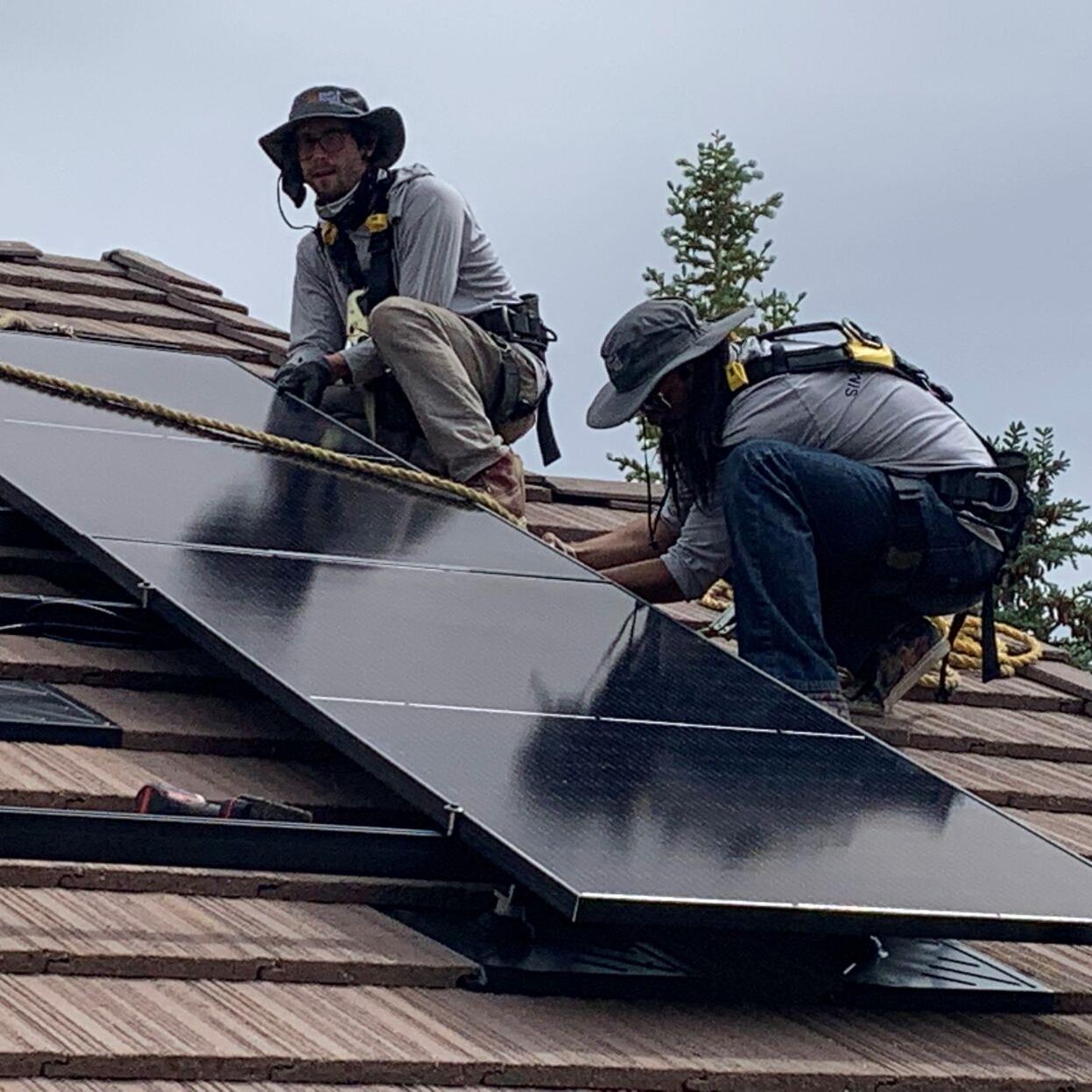
Local solar companies expect the DPA to have an immediate impact on their businesses. Mark Dickson is the president of Simple Power Solar. His business nearly doubled in the last two years, growing employment from 20 to 40 workers.
"That has kind of plateaued and we've backed off on hiring people right now," Dickson said. "We look forward to this new executive order that's going to allow us to go back out and keep on growing."
He says the main reason for the recent slowdown is rising prices. He says solar modules have increased 25% in the last few months because of low supply, and that hoarding by some companies is one of the main reasons for the shortage.
"Obviously, that affects us and customers, so we don't like to see that," Dickson said. "I think over the next month, definitely before the end of the year, more supply should be released into the U.S. and we should see prices go down."
Sen. Jacky Rosen, D-Nevada, is a supporter of the President Biden's move. She says it will affect many businesses in Nevada. The Silver State leads the country in solar energy jobs per capita.
"It's going to keep these 6,000 or more jobs in Nevada, the hundreds of thousands of jobs across this nation and it's going to give us a bridge to increase our domestic solar manufacturing capacity," Rosen said.
Rosen says the plan is to increase American production of solar panels from 15% to about 50%. She says the plan will reduce costs for consumers and companies while helping the environment and economy.
"These are good-paying, American jobs in manufacturing, in installation and in maintenance, and of course when you create these things in a community, they also create other jobs," Rosen said.
The president is also suspending tariffs for 24 months in Vietnam, Cambodia, Thailand and Malaysia. That will allow companies to source modules and cells to help alleviate the supply shortage in the U.S.
"We're missing opportunities now on solar demand that we really need to stabilize and make our grid resilient," McCarthy said.
Dickson thinks solar energy will be a larger source of electricity in the future, and that demand could increase as more people buy electric vehicles.
"It's one thing to put solar modules on to offset the nine or 10 cents a kilowatt of energy but if you're offsetting six-plus dollars a gallon of gas, it starts to really pencil out there," Dickson said.
Since solar panels do not create electricity during the night, home battery systems could play a larger role in the future, too. He says solar is one piece of the puzzle when it comes to renewable energy.