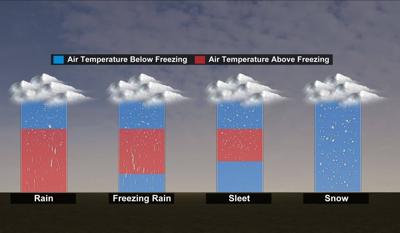
All three types of winter weather snow, sleet, and freezing rain starts out as snow. What makes them different is the change in temperature as they descend from the cloud to the ground. Snow is the easiest to explain. The temperature stays at or below freezing throughout the entire column and the snow is able to retain its structure. If the temperature is slightly above freezing right above the ground, it can still fall as snow. There is not enough melting for there to be a big difference. This is similar to taking a cup of snow and putting it in the freezer. Nothing melts. This is what we usually see in Reno partially because of our higher elevation and topography. Snow can also be light and fluffy and or packed with moisture. Light, fluffy snow accumulates easier, but has less water content. Warmer snowflakes that are packed with moisture don’t accumulate as easy but gives us plenty of water content. This is called Sierra cement.

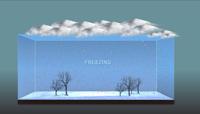
Sleet is more complicated and does not happen very often around here. However, the Reno National Weather service did report some sleet at their office with this past Thanksgiving weekend’s storm. The precipitation starts as snow and then it encounters a layer of warm air and so it partially melts before refreezing again. This can be similar to melting a cup of snow in the microwave part way, and then putting it in the freezer. This turns the partially melted snow into ice pellets or ice cubes. Sleet can also be bouncy and is similar to snow to drive in.

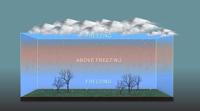
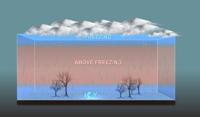
Freezing rain can be the worst to drive in and can bring down power lines too. Freezing rain occurs when the snow completely melts through a large layer of warm air. This turns the snow into rain. As the rain reaches the ground it encounters a thin layer of freezing temperatures near the surface. Which means as the rain hits the ground it freezes with contact, turning our roads into skating rinks.

Graupel is another type of winter weather. It forms from super cooled raindrops sticking to snowflakes. It is also known as soft hail. This can make the roads slick and can feel spongy.
Forecasting precipitation type can be quite difficult as one degree can change everything. It can be even harder in our area because the elevation changes so much within the Reno area.