



The cost of child care is enough to keep some parents out of the work force. Some choose to stay home with the kids instead of pay $200-$300 per child to go to day care each week.
"I have coworkers, I mean, I have family who just had twins," Anastacia Melendy, parent of an infant said. "They cannot afford to put twins in day care because it's twins."
The Build Back Better framework is a $1.75 trillion bill. It includes $400 billion for child care and universal preschool. The goal is to reduce the price of raising kids.
"If you're a working parent and listening to this, this is a huge win for you because one way or another, it's money in your pocket to help pay for the cost of children," Gina Raimondo, U.S. Secretary of Commerce said.
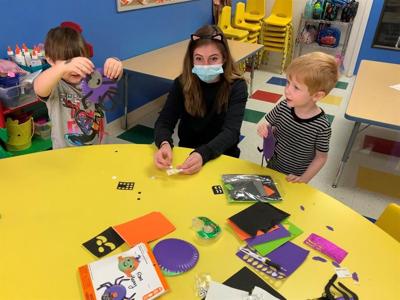
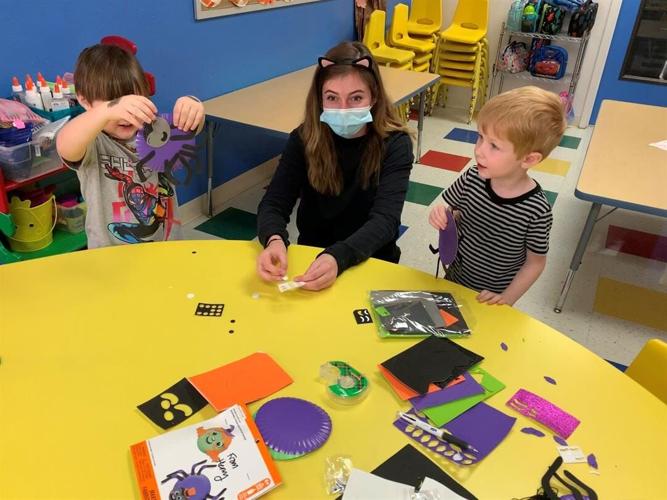
Ryan Putzer is the owner and director of Small Strides, which works with kids age 0-6.
"They play and that's what's important," Putzer said. "We do a ton of art. We do circle times. We do all of the Nevada Pre-K standards but that's all seen through play."
She says the price is not the biggest concern for most of her clients. She says there's not enough child care centers to handle the population of younger kids.
"We have over 250 kids on our waiting list, so we hear from a lot of people that call us that have nowhere to go," Putzer said. "Therefore, they can't go back to work."
The E.L. Cord Foundation Child Care Center has the same problem.
"We get about five inquiries a day of people who need care and we are unable to help them," Keri Meranda, Director of the E.L. Cord Foundation Child Care Center said. "Our waiting list is out at 2023 and 2024."
They wonder how much of a difference the funding will make since some parents will not be able to send their kids to day care even if they have the means. Raimondo says that is where the free preschool comes into play. If the bill passes, pre-k will be free for three-year-olds and four-year-olds.
"Some of the capacity will be in the form of building school facilities to provide the pre-k," Raimondo said.
Raimondo says that construction will be in the form of public schools and head start centers. Putzer says that could reduce the demand on day cares but that it could also shift it to the public school system.
"Where are all of these kids going to go?" Putzer said. "If it's universal and all of the kids get it for free, we're overcrowded in our school district. I just don't know where those kids are going to go."
The pandemic has caused a lot of issues for child care centers. Some of them were closed for more than two months during the shutdown in 2020. Some of those impacts still linger and continue to make capacity a challenge.
"There's nobody out there because places have been closing due to lack of employees, COVID, regulations, a variety of reasons," Meranda said.
Businesses continue to deal with a labor shortage. Raimondo says millions of women have not rejoined the labor force because of child care costs, and that the funding will allow them to go back to work.
"You can put your kids in a safe place that you can afford and be able to go to work, you can hold down a job and be a stable employee and be a full-time employee," Raimondo said.
Democrats appear to be closing in on a compromise for the bill's framework. It will not likely get a vote until next week.