



Northern Nevada Public Health is reporting increased rates of whooping cough in the region.
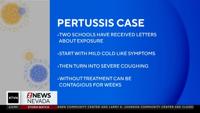
Two schools in Washoe County have received mass notification letters about exposures that are known to have occurred at their schools. NNPH cannot reveal the names of those schools, but a case was reported at Galena High School this week.
NNPH is coordinating with the Washoe County School District to notify parents and staff about potential exposures.
In 2025, NNPH reported 31 cases of whooping cough, which is about three times more than in previous years.
This year, so far, there have been 13 whooping cough cases reported, more than all of 2023 and all of 2024, respectively.
Whooping cough is a highly contagious respiratory illness that often begins with mild, cold-like symptoms such as a runny nose, mild cough, and low-grade fever.
After one to two weeks, symptoms may progress to severe coughing fits that can last several weeks. Some individuals may experience a high-pitched “whoop” sound after coughing, vomiting following coughing spells, or extreme fatigue. Infants may pause their breathing instead of coughing.
Without treatment, the illness can remain contagious for up to three weeks after coughing begins.
With the right antibiotics, that contagious period can be reduced to five days.
Infants have the highest risk of suffering deadly complications from the illness, but it can cause serious complications in every age group.
If a person was exposed to a case of whooping cough during the case’s infectious period, the CDC states that symptomatic contacts to the case should remain out of school or related activities until after completing five days of effective antibiotics.
People who are not treated should remain home for 21 days from the onset of cough.
NNPH encourages people to:
- Consult a healthcare provider if they or their child develop symptoms consistent with pertussis. Early evaluation can help determine whether testing or treatment is needed.
- Keep symptomatic individuals home and avoid group activities until cleared by a healthcare provider.
- Speak with a healthcare provider about post-exposure preventive antibiotics (PEP) if they are close contacts of a confirmed case, particularly if they:
- Are infants under 12 months
- Have health conditions that increase the risk of severe illness
- Are in their third trimester of pregnancy
- Live or work in settings with infants
- Stay up to date on pertussis vaccinations.
- Children should receive the five-dose DTaP series at 2, 4, 6, 15-18 months, and 4-6 years.
- Adolescents should receive one dose (Tdap) at age 11-12 years.
- Adults should receive a booster dose (Tdap) every 10 years.
- Pregnant individuals should receive a Tdap dose during weeks 27-36 of each pregnancy to help protect newborns.
- All household members and caregivers (parents, siblings, grandparents, babysitters, etc.) who will have close contact with an infant should receive a Tdap booster every 10 years.
- Practice everyday prevention: cover coughs, wash hands frequently, avoid sharing personal items, and stay home when sick.