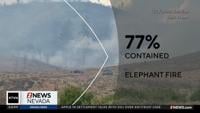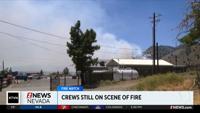


The Davis and Callahan Fires left many without power for several days.
A lot of those residents are now taking precautions to make sure they are better equipped to handle it.
"We've seen a huge influx, probably about 100 times on what we would normally see on the residential side of things," said Wyatt Morency, one of the owners of Amerigan Power Solutions.
Morency says these people are concerned with losing food, having to leave their homes, and were worried if something like this happened in the wintertime, they could see issues with their pipes.
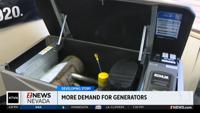
Amerigan has two brands they offer, Kohler and Generac.
Both systems are designed to power a whole home and turn on as soon as the power is out, where it won't skip a beat.
However, there is a lot of work to get these units installed.
"These are permanently installed at your house, so it does take a few trades sometimes to get these done," Morency said. "You're going to have a plumber involved for gas, you're going to have electricians involved and sometimes concrete work."
Morency says most of the generators run on natural gas or propane.
If you are looking to install one of these units, the equipment is about $10,000.
It's about another $5,000 to $10,000 for the install depending on the layout of your home.
Once installed, Morency recommends to have it maintained once a year, which Amerigan charges about $400.
If this is out of your price range, Amerigan can install a transfer switch for about $1,000.
This switch will provide a connection to the wiring in your home that controls your water, air conditioning and heating.
This way, you can plug in whatever generator you can afford into it.
Just know the smaller the generator, the less amount of power you'll be able to supply to your home.
Since NV Energy has called multiple public safety outages, The Home Depot has seen lots of people looking to purchase a generator.
For those in the market, there are three types.
The first is electric, like the ones we saw with Amerigan before.
Those can power the whole house, but it needs to be installed by a licensed electrician and can be costly.
Home Depot can help set you up with an electrician to help you get it set up.
The other two are gas and solar.
"Both generators can almost do exactly the same thing," said Saul Reyes, Operations Manager, The Home Depot located off South Virginia Street. "With the new technology, solar and gas are right tier to tier."
Reyes says gas generators are more simple.
They are portable, and are more of a plug and play, but they do present some dangers if you leave them in the garage.
"Carbon monoxide fumes can be very dangerous," he explained. "They're odorless and you can't see them, so you have to be careful. They recommend 20 feet away from the household where you're powering and to upgrade your carbon monoxide monitors."
Reyes says before you buy a generator, think what you need it for.
If you are just looking to power a fridge to keep your food safe to eat, you can go with a gas or solar generator.
Generators at Home Depot range from as low as $400, up to about $5,000.
"Ultimately, you get what you pay for," Reyes said. "However, some of the smaller generators you can make them work. You'll be able to run a lot more on a bigger generator of course. However, some of the smaller ones can be sustainable, you'll just not be able to run as many things on it."
Reyes says they have a wide variety of generators at the store, but they can also outsource to other companies to get one that best suits you and your budget.
If you can't afford a generator, he says to make sure your stocked up on flashlights, blankets and have a cooler with ice to help keep your food cold.