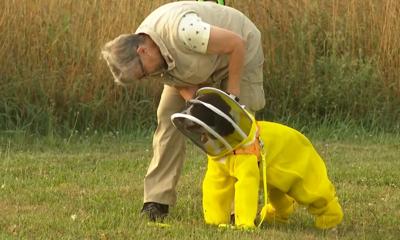



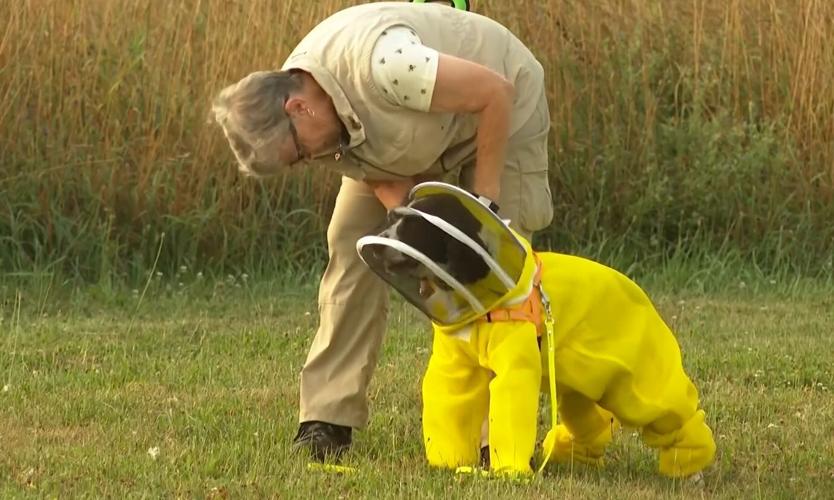
A former sheriff's K9 is on a new mission to maintain law and order in our ecosystem.
Researchers at Michigan State University enlisted an English Springer Spaniel to sniff out a disease that threatens honey bees.
Maple's career in law enforcement ended with an injury last year, but the nine-year-old is still armed with a keen sense of smell, and she's using it to protect one of nature's most important pollinators.
"I was over-the-moon excited, because my dog would still have joy in her life and would still be able to work," says Maple's handler, Sue Stejskal.
"The idea with the dogs is that they can work as a screening tool. So, we have beekeepers that have, you know, 5,000, 10,000 colonies. And it's very hard to go through them with enough rigor to actually see all of the disease," says Meghan Milbrath, University of Michigan honey bee researcher.
The honey bee population has declined significantly over the years because of the disease known as American Foulbrood, along with factors like climate change, insecticides and a lack of a diverse food supply. Approximately one third of the human diet comes from plants pollinated by bees.